
EPR Compliance in Europe 2026 for Marketplaces and Online Sellers
EPR Compliance in Europe 2026 for Marketplaces and Online Sellers
Online businesses need to be aware that the environmental responsibility landscape is changing quickly. EU regulation 2025/40 regarding packaging and packaging waste goes into effect on August 12, 2026, and it will change how online marketplaces and sellers operate in the EU. This guide will give you the essentials so you can prepare for these changes and stay within the law.
If you’re selling in different markets, knowing these differences is key because the rules can be hard to figure out. Detailed country-by-country requirements are available for major EU markets, including Germany, France, the United Kingdom, Spain, the Netherlands, Italy, and Sweden.
Understanding Extended Producer Responsibility Europe framework
Extended Producer Responsibility (EPR) is an environmental policy where manufacturers, importers, and sellers are responsible for their products from start to finish. It’s been around for a while, but the 2026 rules will make it the same across all 27 EU countries.
The European Commission says this new regulation will replace Packaging Directive 94/62/EC and will be used directly in every country. The goal is to remove different national rules and create standards that are the same across the EU. Now, the extended producer responsibility europe framework covers packaging, electronics, batteries, textiles, and more.
EPR registration EU requirements for 2026
Starting soon, all businesses selling products in Europe will need to register. The registration process, required documents, and timelines are explained in detail in the EPR registration guide.
Authorized representatives mandate
By August 12, 2026, any seller who doesn’t have a physical location in an EU country will need to have an Authorized Representative (AR) in each country where they sell. This representative will be legally responsible for making sure everything is compliant, including registration, reporting, and paying fees.
The requirement for EPR registration EU through authorized representatives affects marketplace sellers, cross-border e-commerce businesses, and international vendors. Even small shops that only sell a little bit abroad will need ARs in each EU country where they have customers. It doesn’t matter how big or small the company is, or how much they sell.
National producer registers
By October 2027, each EU country will create its own register to keep track of how well producers are following the rules. Germany’s LUCID register is the example, and other countries are building similar systems. Producers won’t register themselves anymore; their authorized representatives will take care of registration in each country’s database. Extended Producer Responsibility Europe means that companies that make goods are now fully in charge of dealing with their products’ impact on the environment. This shifts how firms manage their products from start to finish.
EPR reporting requirements and deadlines
The reporting framework has a standard dataset to make reporting the same for all EU countries. Practical guidance on data collection, submission formats, and reporting workflows is available in the EPR reporting guide. The European Commission needs to release the final XML/JSON schema format by February 12, 2026.
Key reporting elements
Businesses need to gather and report specific info on their packaging and products. EPR reporting requirements say data collection should happen at the SKU level, including the kind of material, weight, and how recyclable each product is.
Sales destination data shows the exact amounts sold in each country. Material composition needs a detailed list of all packaging materials like plastic, paper, glass, metal, and wood. Also, companies must sort packaging into primary, secondary, and tertiary types.
Organizations should get ready for much bigger data needs. The new system wants full recyclability checks for each part.
Annual reporting cycles
Most EU countries want packaging data every year, usually in the first three months of the next year. For instance, France needs reports by February 29 each year for the amounts sold the year before.
Producers must include their national EPR registration number on all sales documents, like invoices and marketplace listings. ERP systems need updates to gather SKU-level packaging weights for correct invoicing. To meet EPR reporting requirements, you need good data management and regular internal checks.
EPR penalties Europe: understanding enforcement
Not following extended producer responsibility rules can lead to big money problems. The fines change from country to country, but they’re generally getting tougher in Europe.
Country specific penalties
| Country | Fine amount | Additional consequences |
| Germany | Up to €200,000 | Sales bans, marketplace suspensions |
| France | Up to €30,000 per offense | Online sales restrictions, listing removal |
| UK | Civil sanctions | Trading prohibitions, customs holds |
| EU-wide | Varies | Customs detention, loss of market access |
Besides fines, there are other ways to enforce the rules. Marketplaces like Amazon and eBay can stop sellers who don’t comply from listing items. Marketplaces can also hold payments until they confirm a seller is following the rules. Customs can even stop products at the border if the right EPR paperwork isn’t there.
Authorized representatives face civil and administrative liability for client non-compliance under EPR penalties europe regulations. Germany, for example, has a strict system. Businesses that don’t follow the rules there can face huge fines or even be banned from selling products.
The severity of EPR penalties europe continues to increase as member states strengthen enforcement capabilities. Companies that sell in many countries face increasing risks since they can be fined in every country where a violation happens.
Country specific EPR rules across Europe
The 2026 rules try to make things uniform, but how each state puts them into action still varies a lot. If you’re selling in different markets, knowing these differences is key because the rules can be hard to figure out.
Germany: the strictest framework
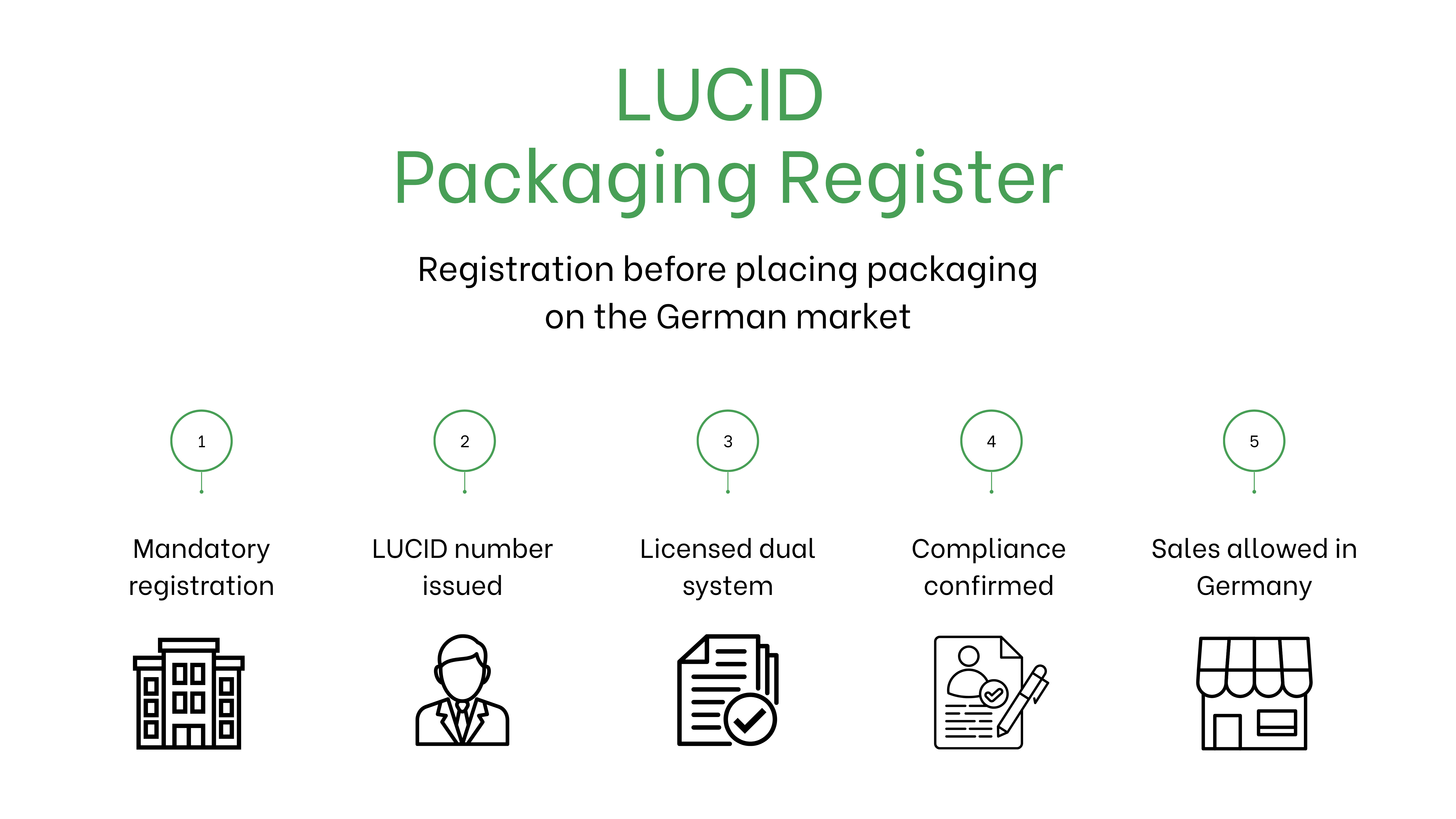
Germany has the most thorough setup with its LUCID Packaging Register. If you make products, you have to sign up before you sell them – no matter how little you sell. These rules also cover single-use plastics starting in 2025, which will change things for international sellers on Amazon and other online stores.
German officials watch country specific EPR rules closely. They give out big fines if you don’t follow the rules and check things very carefully. Germany has the most thorough setup with its LUCID Packaging Register. A full overview of German EPR obligations, registration steps, and penalties is available in the Germany EPR guide.
France: comprehensive coverage
France was one of the first to use EPR plans and has a lot of rules through ADEME (Agency for Ecological Transition). Producers need a Unique Identification Number (UIN) and have to put the Triman logo on their packaging. More details on French EPR schemes and labeling rules are explained in the France EPR guide. French rules deal with packaging, electronics, batteries, clothing, and furniture, and you have to sign up no matter how little you sell.
France’s way of doing things with extended producer responsibility europe serves as a good example for complete environmental responsibility. If you sell in France, you have to deal with several EPR areas at once, and each has its own needs and reporting you have to do.
Spain: recent expansions
Spain started packaging rules on January 1, 2023, and started more battery rules in October 2024. Online stores have to check if sellers are following the rules and remove sellers that aren’t. Spain’s country specific EPR rules show the country cares about circular economy ideas, putting main focus on cutting down on single-use plastics and pushing for better packaging choices.
Netherlands, Italy, and Sweden
Different countries have set up EPR systems, each with its own rules. The Netherlands needs you to sign up through approved organizations, while Italy really wants biodegradable plastic packaging. Sweden says everyone needs to be covered, no matter how much they make.
Knowing these country specific EPR rules is super important if you’re trying to grow your business in Europe. Even though the EU is trying to make things the same across the board, each country still has its own way of doing things.
WEEE EPR compliance for electronics sellers
Electronics waste represents one of Europe’s fastest-growing waste streams, increasing by approximately 3-4% annually. Requirements for electrical and electronic equipment are becoming increasingly stringent for online sellers.
Current WEEE directive framework
The EU’s rules for electronic waste (WEEE) say that we need to collect, treat, recycle, and reuse all old electronics. Right now, we only collect and recycle 40% of this stuff in the EU, which is not enough to meet our 65% goal. WEEE EPR compliance covers ten product categories ranging from large household appliances to photovoltaic panels, with specific collection and recycling targets for each category.
Marketplace requirements
Soon, by the end of 2025, Amazon will require everyone selling electronics to give them their WEEE registration numbers. Online stores can get in trouble if sellers don’t follow the rules, so they’re starting to check things more carefully.
In Germany, you have to sign up your products and give them WEEE numbers through Stiftung EAR. If you’re a company from another country, you have to pick someone in Germany to handle all the WEEE stuff for you.
2026 WEEE directive revision
The EU is working on a big update to the WEEE rules as part of the Circular Economy Act, which should be out by the end of 2026. They want to collect more than 65% of electronic waste, recover more important materials, and make the EPR systems the same in all countries.
The EU noticed that some people, like online sellers, aren’t following the rules. They plan to get tougher on making sure everyone follows the WEEE EPR compliance, especially with more and more stuff being sold online across borders. This way, sellers from different countries will be treated fairly.
Battery EPR requirements: complete 2026 guide
The EU Battery Regulation (2023/1542) became law on February 18, 2024, replacing the old 2006 rules. The new rules apply to all kinds of batteries sold in the EU, even those inside products like phones, power tools, and electric cars.
Mandatory registration deadlines
By August 18, 2025, every battery seller has to sign up in each EU country where they sell batteries. This goes for small batteries in electronics, big industrial batteries over 2 kWh, batteries for electric cars, and batteries for e-bikes and e-scooters.
Amazon said that sellers need to give battery registration numbers by March 31, 2026. If they don’t, Amazon will automatically enroll them in a Pay on Behalf service, which costs extra. Other online stores like Zalando have stopped selling things with batteries for a while to set up ways to check registrations. Battery EPR requirements apply regardless of battery size or product price point.
Labeling and information requirements
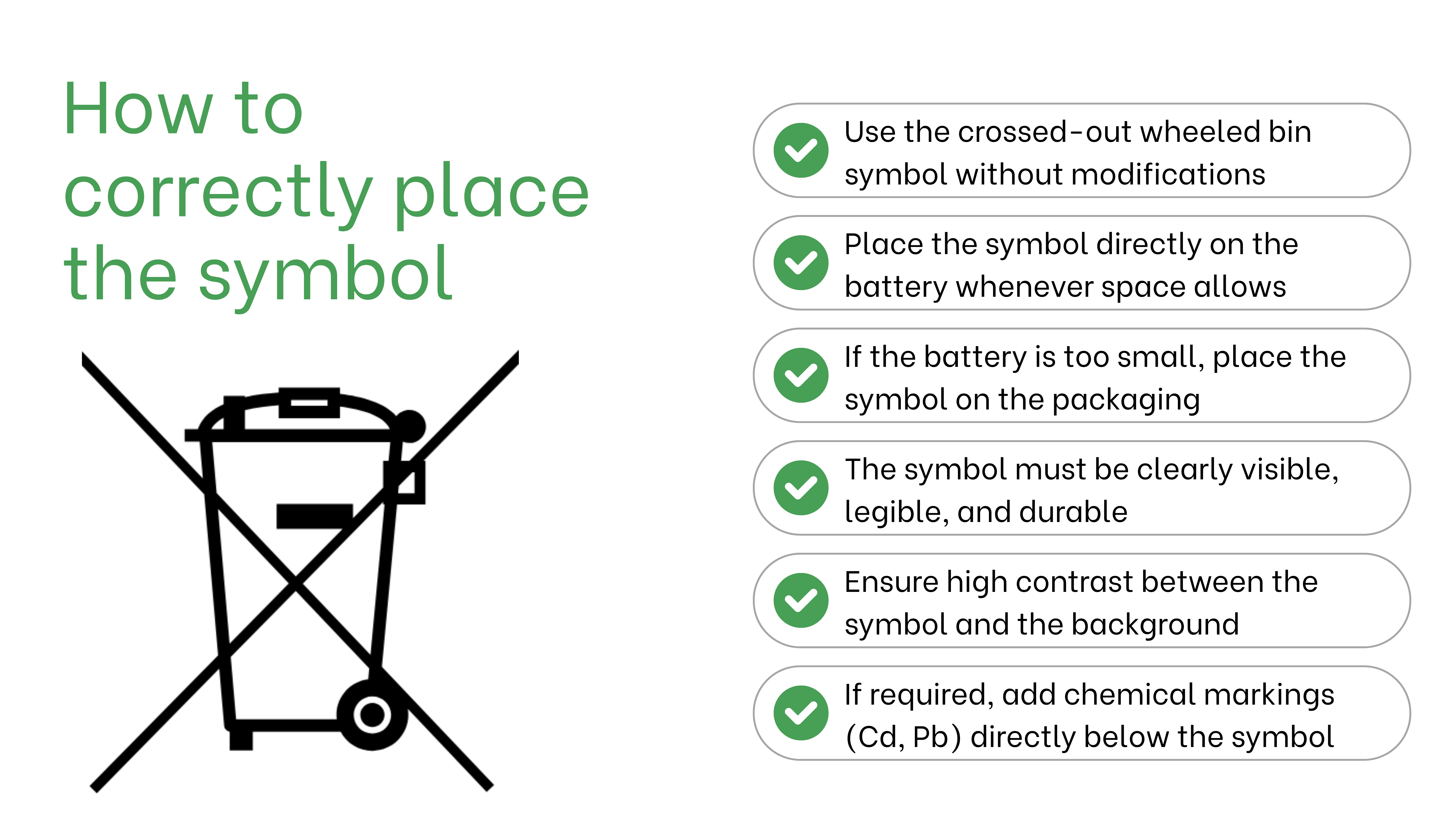
From August 18, 2025, batteries need to have a symbol that tells people to recycle them separately. Also, by August 18, 2026, batteries need labels with general info, how much power they hold, how long they last, if they’re not rechargeable, and QR codes. These codes will connect to digital battery passports starting February 18, 2027.
These battery EPR requirements are meant to make the whole process clearer and help buyers choose batteries that are better for the environment. The digital battery passport is a pretty big step for keeping track of products.
Carbon footprint declarations
Starting February 18, 2025, electric vehicle batteries must show their carbon footprint. Industrial batteries will follow in 2026, and light-duty vehicle batteries by 2028. These rules aim to make things clearer and push for cleaner battery making. Battery EPR requirements are about managing the battery’s whole life, from getting them back for recycling to meeting recycling goals and recovering valuable materials.
Practical implementation steps for compliance
Getting ready for EPR compliance by 2026 calls for careful planning. Here’s what you need to do to meet all the rules in different areas for various products.
Immediate actions (Q1 2026)
- Audit your product portfolio: Identify all products requiring EPR registration in each market, including packaging, electronics, batteries, and other regulated categories
- Appoint authorized representatives: Begin selecting ARs in countries where you lack establishment, prioritizing markets with highest sales volumes
- Update data systems: Ensure ERP systems capture SKU-level packaging weights and material data for accurate EPR registration EU processing
- Review marketplace requirements: Verify platform-specific EPR documentation needs and submission deadlines
Pre-August 2026 preparation
Get EPR numbers in each country via authorized reps before August 12. Put registration numbers on all sales documents to prove you’re following the rules. Teach your shipping and sales partners about their new roles in compliance, as they could be held responsible for helping with sales that don’t comply. Rate packaging recyclability using the A-C system under EPR reporting requirements. Plan for higher eco-fees because of broader requirements for different waste types. Think about hiring compliance staff or working with experts in EPR services.
Ongoing compliance management
Check annual reports every three months before sending them to each country’s Producer Responsibility Group. Keep track of fee payments based on how much you sell, ensuring correct and on-time payments.
Update packaging info for new products before selling them, including EPR penalties europe when planning product timelines. Watch for changes in national rules, as each country specific EPR rules are changing after the 2026 standard is set.
Maintain detailed records of WEEE EPR compliance activities for electronics products and battery EPR requirements documentation for all battery-containing items. These records prove invaluable during audits or enforcement actions.
Leveraging EPR for competitive advantage
Complying with EPR costs money, but smart companies are using it to stand out in markets that care more and more about the environment. Packaging that’s designed to be eco-friendly gets lower fees because it’s easier to recycle, while packaging that causes problems gets charged extra.
Companies that talk about their recyclable packaging and share real data about their environmental impact can have stronger talks with other businesses and better marketing to customers. Being open about following extended producer responsibility europe builds trust with customers who care about the planet.
Most importantly, if you comply early, you won’t get kicked off marketplaces and can keep selling in all EU countries without any problems. In today’s online shopping world, having a supply chain that always works is a huge leg up on the competition.
Conclusion
EPR compliance in Europe by 2026 is a big change for how online businesses work. The new rules under the Packaging and Packaging Waste Regulation (EU) 2025/40, along with changes to WEEE and battery rules, make things tough but also open up chances for marketplaces and sellers.
To do well, you need to get what the new rules actually say, register with the right people, keep your reporting correct, not get hit with big fines, understand how things change from place to place, be sure your electronics follow the rules, and meet battery regulations for everything you sell that has batteries.
Begin getting compliant now – August 12, 2026, will be here before you know it. Team up with compliance experts, put money into good data systems, and turn being environmentally responsible from just something you have to do into something that helps you beat the competition.