
E-Invoicing Compliance Guide

The E-Invoicing Compliance Guide is a practical resource created to help businesses navigate global e-invoicing requirements with confidence. It provides implementation guidance, compliance best practices, and country-specific regulatory insights to support businesses operating in an increasingly complex and fast-changing compliance landscape.
E-invoicing e-book

Why e-invoicing matters

Whay is e-Invoicing
Why it matters
What’s inside the guide

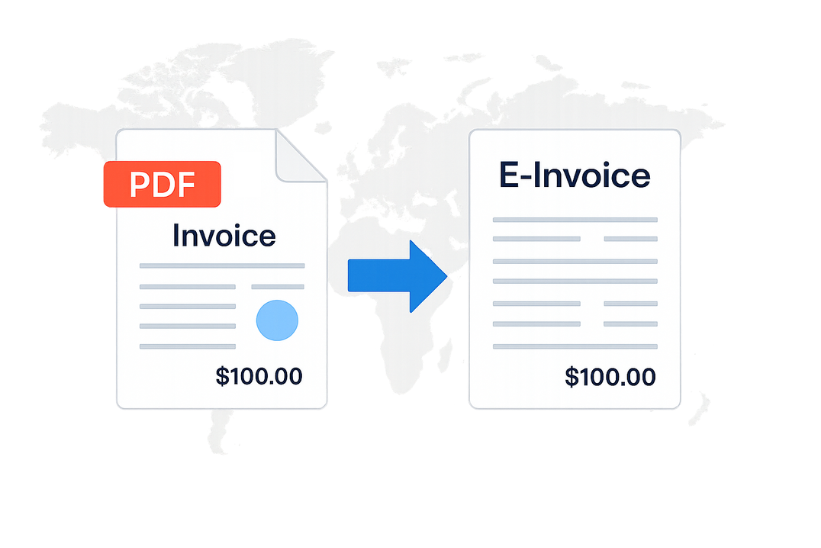
Digital issuance, submission, validation, and storage of invoices in structured formats that support tax compliance and automation.

E-invoicing helps businesses reduce compliance risk, improve processing speed, lower manual workload, and stay aligned with country-specific mandates.

Read more

A practical country-by-country overview of timelines, scope, validation models, penalties, and implementation considerations
Certified Peppol Access Point Provider

Countries covered

  • Belgium
  • Brazil
  • Croatia
  • Denmark
  • France
  • Germany
  • Hungary
  • India
  • Indonesia
  • italy
  • Japan
  • Latvia
  • Makaysia
  • Mexico
  • Philippines
  • Poland
  • Saudi Arabia
  • Singapore
  • Slovakia
  • Spain

More e-books

GPSR Compliance Guide

Our free guide provides a clear, step-by-step roadmap to help you understand and implement the GPSR requirements

more details

EPR Compliance Guide

Guide provides a step-by-step approach to understanding and fulfilling your obligations under EPR regulations

more details

E-Invoicing Compliance Guide

The E-Invoicing Compliance Guide 2025 is a comprehensive resource designed to help businesses...

more details

Frequently asked questions for e-invoicing

What is e-invoicing?

E-invoicing is the digital issuance, submission, validation, and storage of invoices in a structured electronic format. It helps businesses meet tax compliance requirements, reduce manual errors, and streamline invoicing workflows

Why is e-invoicing important for businesses?

E-invoicing improves tax compliance, reduces administrative costs, increases accuracy, and supports faster, more efficient invoicing processes. It also helps businesses adapt to country-specific legal requirements and digital tax reporting models.

What is the difference between e-invoicing and e-billing?

E-invoicing is usually a regulated process designed for tax compliance and validation by tax authorities or approved platforms. E-billing is generally used for customer communication and payment workflows without the same regulatory requirements. This distinction appears across multiple countries in the guide.

How can a business prepare for e-invoicing?

Businesses should understand local regulations, assess whether their current systems are compatible, adopt compliant software, train internal teams, and align processes with customers and suppliers.

Is e-invoicing mandatory in all countries?

No. E-invoicing rules vary by country, transaction type, and business category. In some countries it is already mandatory for B2G or B2B transactions, while in others it is still being phased in or planned for future adoption.

Which transactions are usually covered by e-invoicing rules?

Requirements may apply differently to B2B, B2C, and B2G transactions. In many jurisdictions, B2G is mandated first, then B2B, while B2C may remain optional or subject to lighter rules.

Do businesses need special software for e-invoicing?

In most cases, yes. Businesses usually need software or platforms that support local formats, validation rules, submission methods, and archiving requirements. The guide also recommends adopting certified or approved software where required.

What data is usually required in an e-invoice?

Typical required fields include buyer and seller tax IDs, invoice number and date, payment terms, line-item descriptions, quantities, prices, VAT or tax details, total amount, currency, and sometimes delivery information or digital signatures.