
EPR for textile in the US
EPR for textile in the US
Textiles are moving into a new compliance phase. Textile EPR is no longer a niche topic for someone who we don’t know. It is becoming a routine task and a risk for all brands.
Many teams ask one question first – Where do we start with the framework planning. The best answer is data and role clarity and to write to us here
This EPR guide explains how obligations can appear across states. EPR program affects design, sourcing, and operations. It also affects reporting speed and evidence quality.
What textile companies should expect with Textile EPR is US
A modern textile supply chain crosses many borders and EPR can still apply at the state level. That is why mapping sales channels matters.
If you selling products from textiles in the USA , you should track the direction of policy.Most of the conversations begin with waste, reuse, and collection. They quickly move toward fees and reporting.
Some businesses assume textiles are “just fabric.”.Problem came from the moment when in was noticed that EPR programs often define textiles broadly. Sometimes even apparel, accessories, and home textiles may be included. Product scope most probably will expand over time.
Readiness depends on where you ship from. It also depends on who is named as the obligated party.
How a textile company should prepare for a EPR textile
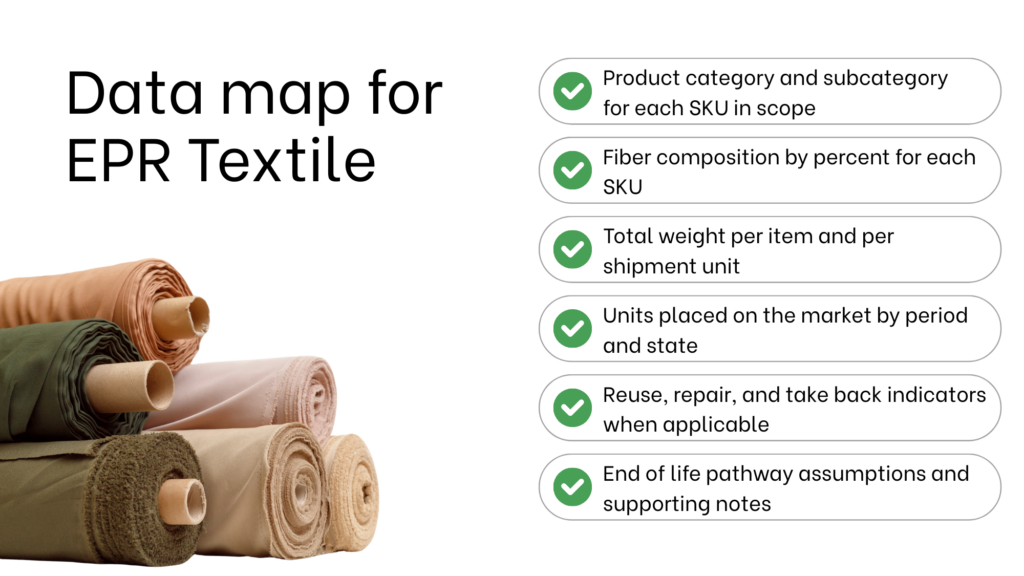
Data map for EPR Textile
- Product category and subcategory for each SKU in scope
- Fiber composition by percent for each SKU
- Total weight per item and per shipment unit
- Units placed on the market by period and state
- Reuse, repair, and take back indicators when applicable
- End of life pathway assumptions and supporting notes
Comparative table of who often reports and what changes
| Business role | Typical trigger | What to prepare first |
| Brand owner | Own brand sold in state | SKU list and bill of materials |
| Importer of record | Imported finished goods | Shipping volumes and SKU mapping |
| Retailer with private label | Retail brand control | Product specs and units sold |
If a marketplace sits between you and buyers, clarify who counts.
What data you need for a New York Textile EPR
Legislative proposals can move quickly – EPR teams should treat New York as a key watch point. It is a large market with strong policy influence.
A practical approach is scenario planning – discussions about EPR often include reuse and collection. They can also include performance targets and reporting.
For planning, build a state “readiness pack.” – preparation means you can respond when details are finalized. A readiness pack is data plus governance. You should keep internal assumptions explicit – New York EPR program may define producer differently than other states. Do not assume the same trigger language.
Also prepare messaging for stakeholders – EPR affects design and marketing claims. Claims about durability or recyclability can be questioned.
When your leadership asks “what is the exposure,” answer it with data, answer is usually volume driven. Volume is tied to units, weight, and material type.
What data you need for a Washington Textile EPR
Washington is another key signal state for Textile EPR. Teams should monitor Washington activity closely as it often shapes broader adoption patterns.
The first move is internal alignment with Washington EPR readiness. It starts with clarifying who owns state monitoring and then define who owns filing execution.
For execution, define a repeatable quarterly process – program work becomes manageable with a calendar. The calendar should include data freezes and approvals.
It also helps to keep vendor inputs predictable – EPR reporting can require supplier data. If you need fiber composition, lock it contractually.
If you run multiple brands, align definitions across brands – readiness improves when SKU logic is consistent. Consistency reduces corrections later.
Finally, keep your legal review on focus – EPR Washington’s timelines can shift while Your internal workflow should be flexible without losing control
Textile EPR directive that improve your EPR Reporting
Many textile businesses sell across regions. Textile EPR maturity improves when you learn from other frameworks. The EU has more history with producer responsibility.
The Textile EPR directive discussion highlights common expectations:
- Textile EPR programs usually want clear producer identification.
- They also want traceable reporting and funding.
One practical lesson is eco design linkage – Textile EPR directive often connects product design to end of life outcomes. That pushes teams to track fiber blends better.
Another lesson is documentation discipline. Textile EPR audits often look for proof. Proof includes method notes, data sources, and approvals.
If you prepare for multi region work, build a shared glossary. Textile EPR directive’s vocabulary can differ from US wording. A glossary avoids internal confusion.
What to watch in Textile EPR news today and EPR textile news feeds
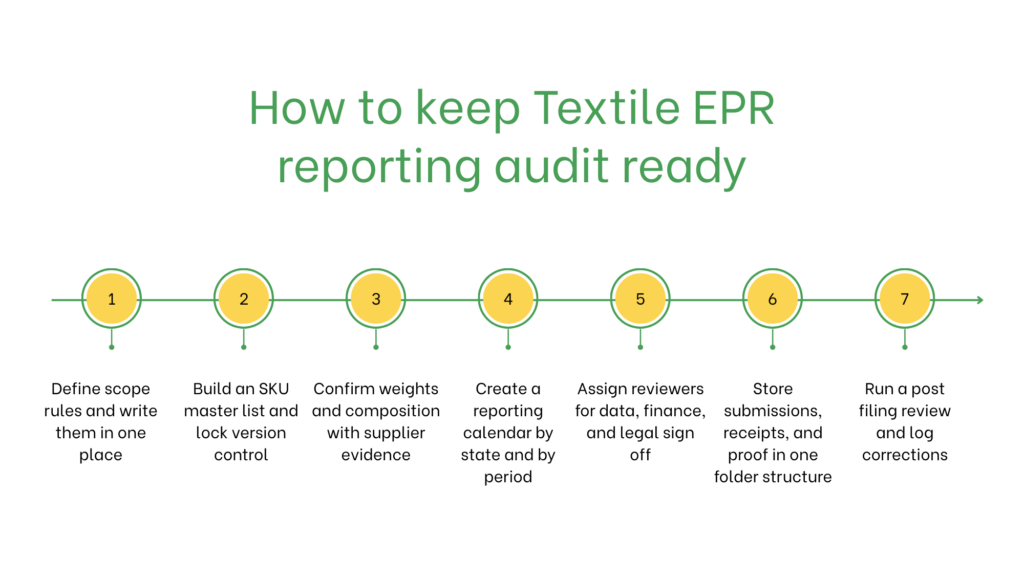
How to keep Textile EPR reporting audit ready
Use a staged workflow. Textile EPR execution usually needs data preparation, review, and submission. Each stage needs an owner and a deadline.
- Define scope rules and write them in one place
- Build an SKU master list and lock version control
- Confirm weights and composition with supplier evidence
- Create a reporting calendar by state and by period
- Assign reviewers for data, finance, and legal sign off
- Store submissions, receipts, and proof in one folder structure
- Run a post filing review and log corrections
Best textile EPR planning
A state may be at different maturity levels. Textile EPR planning works when you rank states by signal strength. Then you allocate effort.
Use this lightweight comparison to guide your roadmap. Textile EPR work is easier when prioritization is transparent.
| State focus | Typical readiness goal | Practical internal output |
| California Textile EPR | Pilot dataset and governance | First full SKU mapping and weights |
| New York EPR | Scenario plan and monitoring | Readiness pack and owner assignment |
| Washington EPR | Monitoring plus supplier discipline | Supplier data rules and review cycle |
This table is a starting point, not legal advice. Textile EPR details can change. Always validate the latest official text before filing.
Practical next steps for Textile EPR execution
- data quality work
- governance work
Do them in parallel.