
Methods of Marking Electrical Equipment
Methods of Marking Electrical Equipment
The electronics manufacturing industry operates under strict regulatory requirements that mandate proper identification and traceability throughout the product lifecycle. Manufacturers must use specific methods of marking to ensure compliance with international standards, facilitate equipment identification, and support environmental initiatives. These marking requirements have changed significantly since August 2005, when the European Union introduced comprehensive rules governing the marking of electrical products before they are placed on the market.
Proper implementation of marking labeling equipment serves several important functions in manufacturing ecosystems. It allows regulators to verify manufacturer information, helps consumers identify authentic products and access safety data, supports waste recycling initiatives, and ensures that important information is available throughout the equipment’s lifetime. This systematic approach has evolved from simple requirements to a comprehensive framework that supports the principles of the circular economy and product stewardship.
Regulatory requirements for electrical equipment identification
According to European Directive 2002/96/EC, widely known as the WEEE Directive, WEEE marking requirements apply to all electrical equipment placed on the market after August 13, 2005.This requirement sets clear deadlines for compliance and creates responsibility throughout the supply chain. The Directive applies to a wide range of products, including household appliances, consumer electronics, lighting equipment, power tools, control and measuring instruments, and industrial equipment.
Manufacturer identification is the foundation of product traceability systems. Companies must implement identification using one of three approved methods, each designed to provide clear and verifiable information about the origin of equipment, while taking into account different business structures.
- Complete personal name and surname or full business name of the manufacturer, displayed in clear and legible format
- Registered brand name under which the manufacturer imports or places electrical devices on the market
- Manufacturer’s unique registration number in the official Register of Manufacturers
Each identification method has its own strategic advantages. Full names provide instant recognition and build consumer trust. Brand names help achieve marketing goals while ensuring compliance. Registration numbers are a compact alternative that minimizes space requirements and allows for links to comprehensive official databases.
Symbol marking standards for market compliance
The market placement symbol is an important component of electrical product identification, requiring specific implementation to ensure compliance with regulatory requirements. Manufacturers must affix one of three approved symbol marking formats to their products, clearly indicating that the equipment has been placed on the market in accordance with applicable regulatory requirements.
- Complete date of manufacture or placing on the market displayed in clear, unambiguous format
- The standardized alphanumeric designation ‘8/05’ indicating compliance with post-August 2005 requirements
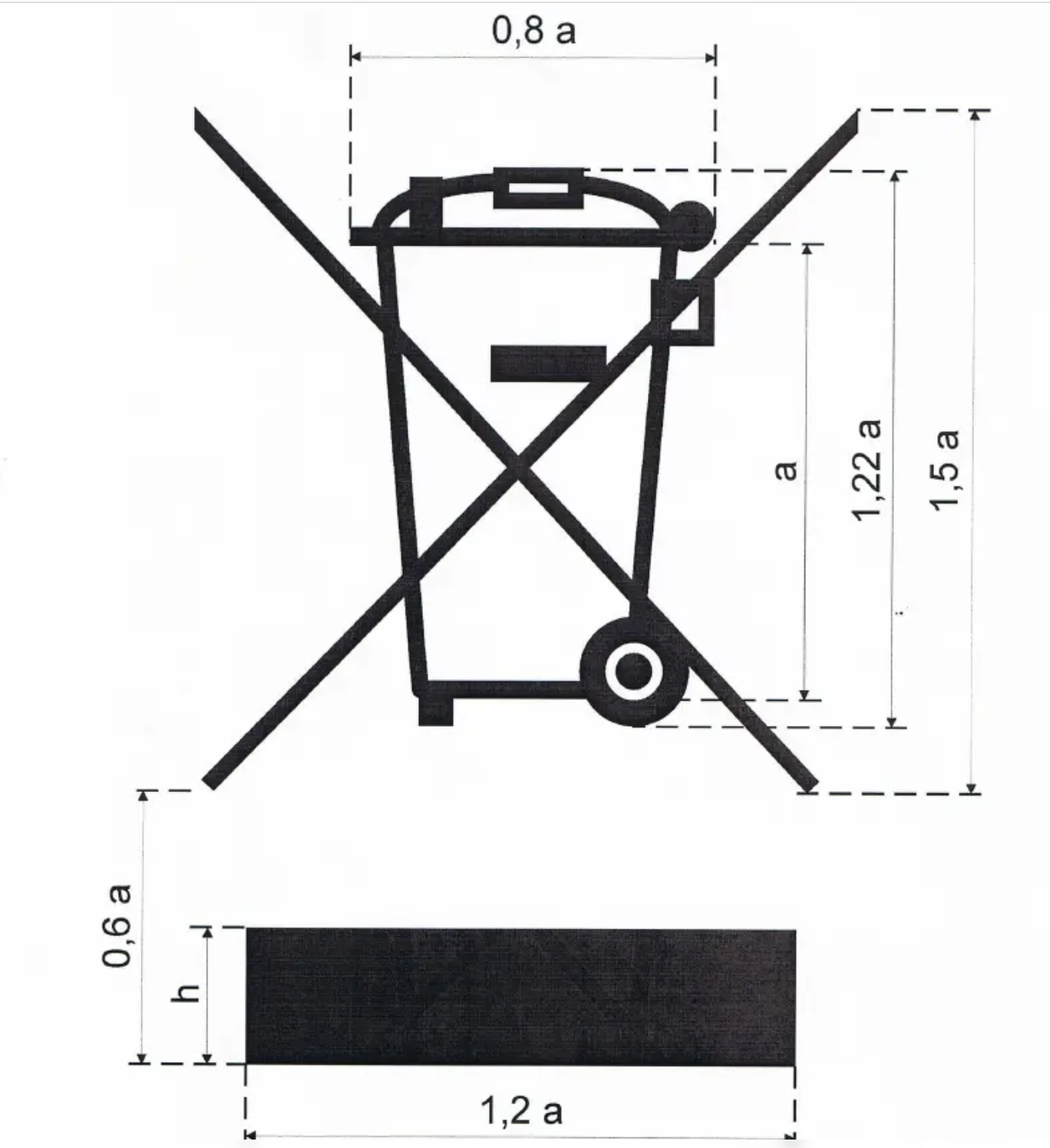
- Graphic symbol conforming to precise dimensional specifications defined in European Standard EN 50419
The graphic symbol has become widely used in the electrical products manufacturing industry due to its universal recognition. This WEEE symbol has a distinctive design in the form of a crossed-out wheeled container, which effectively communicates the need for separate collection of equipment for proper recycling. This internationally recognized visual approach overcomes language barriers and literacy levels.
Technical Specifications for WEEE regulatory graphic symbols
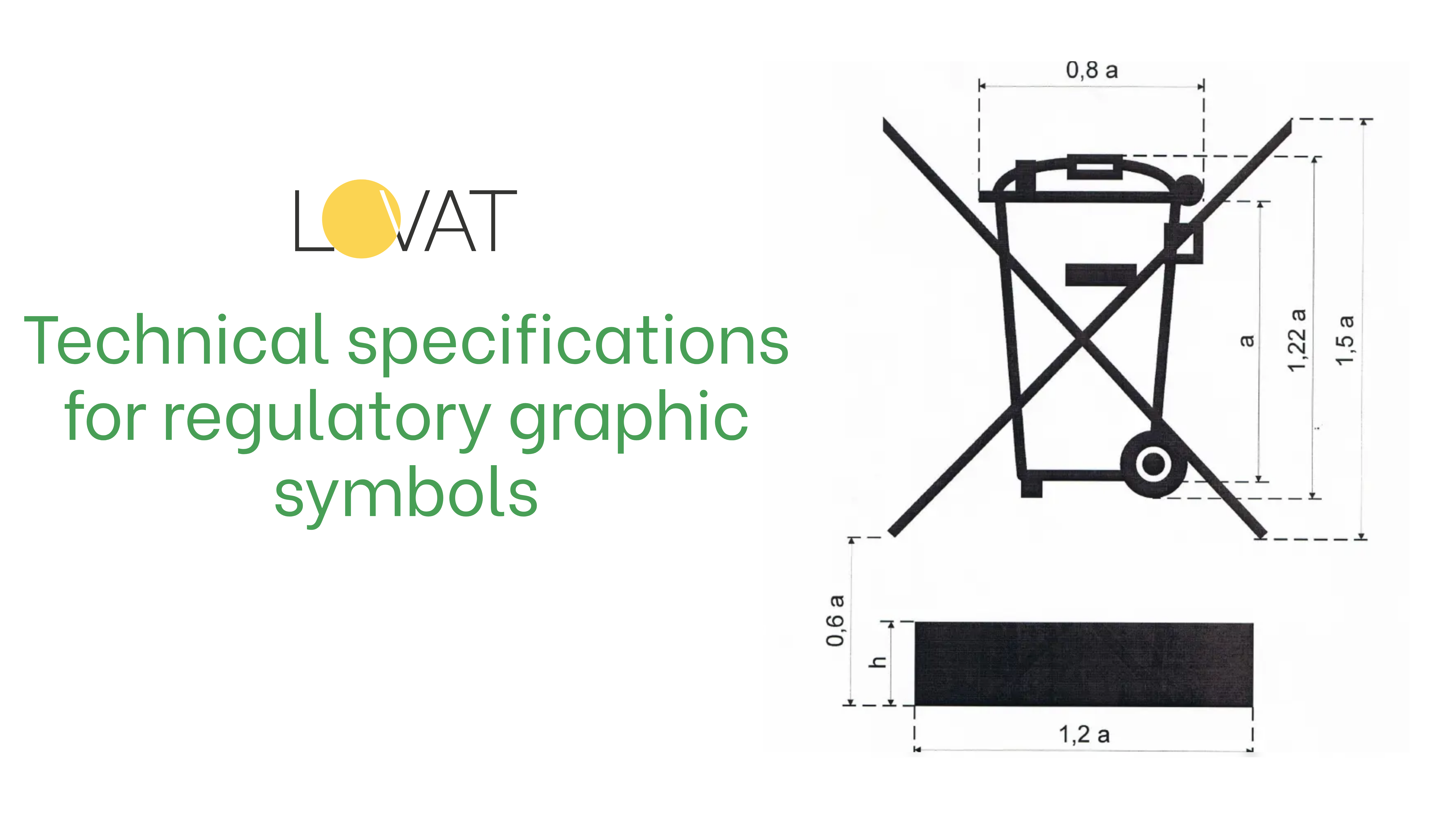
European standard EN 50419 establishes precise requirements for the dimensions of the WEEE graphic symbol, ensuring consistency across different product sizes. The crossed-out wheeled container symbol must comply with specific minimum dimensions to ensure legibility. According to the standard, the minimum height (h) of the symbol must be at least 1.5 millimeters, and the width must correspond to a proportional ratio of 1.2 of the size “a,” which gives a minimum width of 4 millimeters when scaled correctly.
The standardized proportions of the symbol ensure optimal legibility at different scales. The minimum height of 1.5 millimeters is a threshold below which the design loses visual clarity. The specified width ratio of 1.2 times the size of “a” ensures the correct aspect ratio, preventing distortion that could impair symbol recognition.
An alternative standardized marking format consists of a solid black bar, giving manufacturers additional flexibility. The black bar must be 1.2 times the size of “a,” equivalent to 4 millimeters in width, with a minimum height (h) of 1 millimeter. This creates clear rectangular shapes that provide strong visual contrast on typical equipment surfaces.
Need help with WEEE compliance? Lovat supports electronics manufacturers and importers with WEEE registration, reporting, labeling, and documentation across EU markets. Book a demo
Professional labeling equipment technologies and selection
Manufacturing companies depend on modern professional marking equipment that allows them to apply regulatory markings efficiently, accurately, and durably to a variety of product lines. Key factors influencing the choice of equipment include production volumes, substrate compatibility, environmental conditions, required marking durability, and integration capabilities with existing systems.
Labeling technologies comparison
| Technology | Application Method | Durability | Optimal Use Cases |
| Laser Engraving | Direct substrate ablation |
Permanent | Metal housings, permanent identification |
| Industrial Inkjet | Digital droplet application |
Moderate to high | Flexible packaging, cartons |
| Thermal Transfer | Heat-activated ribbon | High | Labels, serial plates |
| Pad Printing | Indirect transfer | High | Irregular surfaces, small parts |
Laser engraving systems provide exceptional durability for electrical equipment that requires permanent identification. These systems use focused laser energy to alter the surface of the substrate, creating markings that are resistant to chemical attack, mechanical abrasion, and extreme temperatures. Industrial fiber laser markers achieve extreme precision, reproducing complex symbols and detailed graphics on metal components and engineering plastics.
Thermal transfer printing dominates label production due to its versatility and cost-effectiveness. These devices apply controlled heat to special ribbons, transferring the material to labels with exceptional edge definition. This technology supports variable data printing, allowing manufacturers to efficiently create unique identifier codes, serial information, and production dates.
Industrial labeling equipment selection criteria and evaluation
Selecting the right industrial labeling equipment requires a comprehensive assessment of operational requirements and technical capabilities. Production managers must evaluate critical factors that determine which technologies deliver optimal performance.
- Production throughput requirements measured in units per hour, considering peak demand periods
- Comprehensive substrate compatibility covering metals, plastics, composites, glass, and ceramics
- Environmental resistance specifications addressing moisture, chemicals, UV radiation, and temperature cycling
- Integration capabilities with enterprise resource planning and manufacturing execution systems
- Mark quality verification systems incorporating vision inspection and barcode validation
Modern labeling equipment is increasingly equipped with automatic verification functions that guarantee marking quality. Machine vision systems capture high-resolution images of applied markings and compare them with digital templates. These systems check dimensional accuracy, detect missing elements, and verify text legibility in accordance with quality standards.
Unique identifier systems in modern electrical equipment
In addition to mandatory regulatory symbols, manufacturers are implementing comprehensive systems of unique identifier that transform product labeling into strategic business opportunities. These identification systems support warranty management, product recall coordination, counterfeit prevention, and supply chain transparency.
Serial numbers are the most common format for unique identifier in the electrical equipment industry. Manufacturers assign sequential or algorithmically generated codes to individual units of production. These alphanumeric strings typically contain production facility identifiers, date of manufacture codes, and product model variants, enabling accurate tracking.
Identifier types comparison
| Identifier Type | Data Format | Information Capacity | Reading Method |
| Serial Numbers | Character sequences | Limited (8-20 characters) | Visual reading, manual entry |
| Linear Barcodes | Variable-width lines | Moderate (up to 80 characters) | Optical scanning |
| QR Codes | Square patterns | High (up to 4,000 characters) | Camera-based imaging |
| Data Matrix | Dense patterns | Very high with error correction | Industrial scanners |
| RFID Passive Tags | Microchip data | Moderate (typically 2KB) | Radio frequency readers |
Two-dimensional barcodes have become widely used in electronics labeling due to their exceptional data capacity. QR codes can encode website URLs that direct users to product documentation, installation instruction videos, and technical support information. This digital connection transforms static product labels into dynamic information gateways that enhance the user experience.
Radio frequency identification integration for advanced tracking
Radio frequency identification technology is revolutionizing automated inventory management and asset tracking. Unlike optical technologies that require scanning within the field of view, RFID tags communicate wirelessly with reading systems, allowing multiple items to be scanned simultaneously. This capability optimizes warehouse operations and provides real-time visibility in complex supply chains.
Modern enterprises use RFID-enabled industrial labeling equipment that integrates tagging and data encoding into manufacturing processes. These systems apply tags containing RFID inserts and program them with specific product information in a single automated operation.
Material selection strategies for durable equipment markings
The choice of label substrate material has a significant impact on the durability of the marking and its compliance with regulatory requirements. Effective methods of marking must take into account the specific operating conditions in which electrical equipment is used. Consumer electronics used indoors require different material characteristics than industrial equipment used outdoors and exposed to extreme temperatures, precipitation, and chemical vapors.
Label material properties
| Material | Temperature Range | Chemical Resistance | Primary Applications |
| Polyester (PET) | -40°C to +150°C | Excellent | General industrial, asset tags |
| Polyimide (Kapton) | -269°C to +400°C | Superior | High-temperature equipment, electronics |
| Vinyl (PVC) | -18°C to +80°C | Good | Indoor equipment, temporary labels |
| Polycarbonate | -40°C to +120°C | Excellent | Outdoor equipment, nameplates |
| Anodized Aluminum | -40°C to +370°C | Exceptional | Harsh environments, permanent plates |
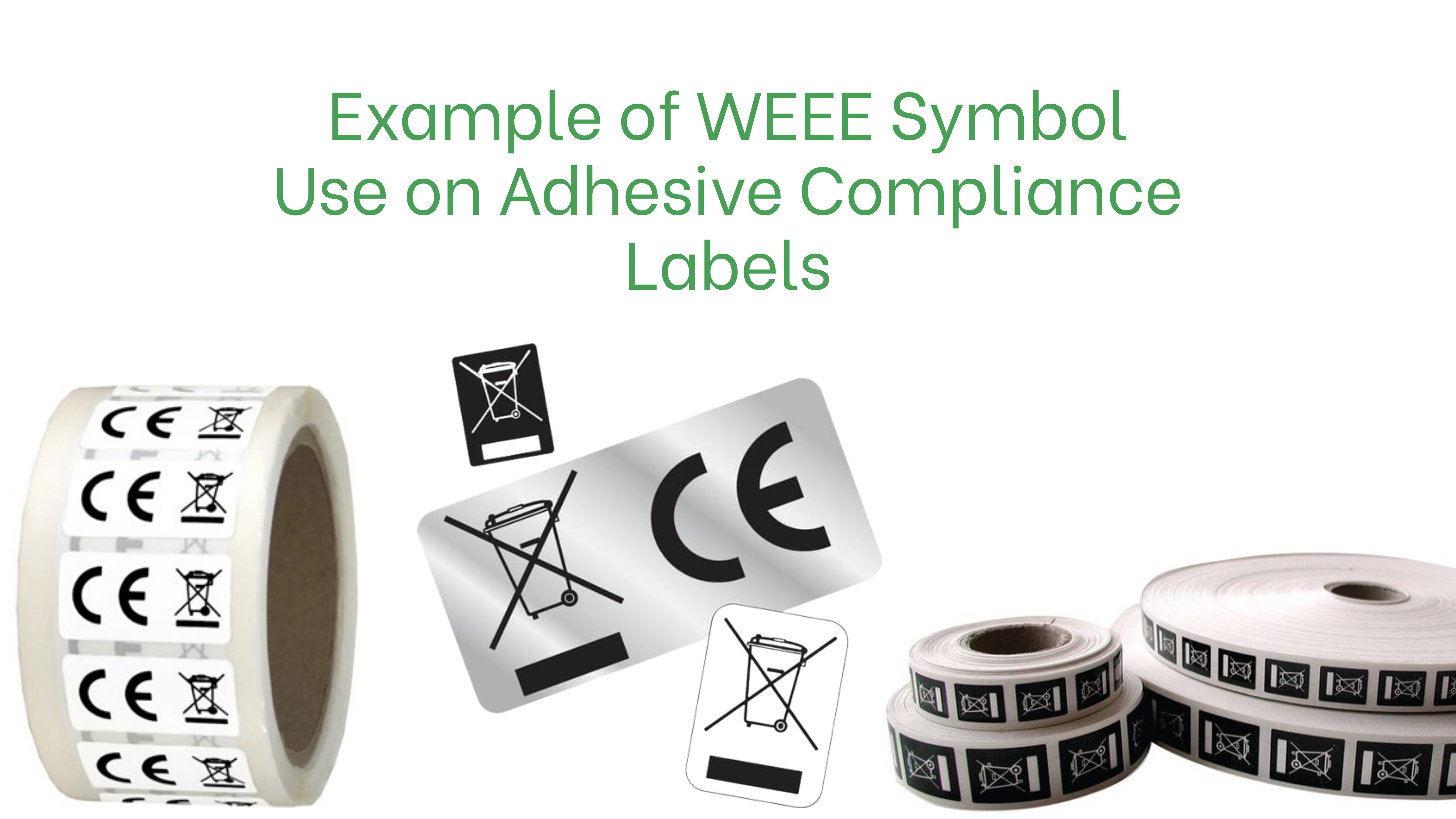
Polyester film substrates ensure reliable operation of most industrial labeling equipment. The material does not change its dimensions, is resistant to tearing, and maintains exceptional print clarity under temperature fluctuations. Polyester labels withstand exposure to common industrial fluids without compromising quality.
Extreme operating conditions require the use of special high-quality materials. Polyimide film demonstrates exceptional stability over an extremely wide temperature range, withstanding cryogenic conditions and constant exposure to temperatures exceeding 300 °C. Anodized aluminum plates provide maximum durability for outdoor installations that require decades of weather resistance.
Labeling equipment market trends and industry evolution
Current trends in the marking equipment market reflect the acceleration of production automation and the expansion of regulatory requirements. Industry analysts predict steady market growth driven by increased serialization requirements, food safety traceability, and supply chain transparency initiatives. These labeling equipment market trends indicate fundamental shifts in manufacturing paradigms across diverse industrial sectors.
Digital printing technologies are gradually replacing traditional analog marking systems. Modern inkjet and laser platforms eliminate the need for costly printing plates, reduce changeover time, and enable cost-effective production of small batches. The transition to professional labeling equipment allows you to respond quickly to market changes and implement strategies for mass customization of products.
- Expanding track-and-trace regulations across pharmaceutical and consumer goods industries
- Smart manufacturing initiatives demanding integration between labeling systems and enterprise infrastructure
- Sustainability concerns driving adoption of recyclable label materials and reduced waste
- Counterfeit prevention strategies incorporating sophisticated security features
- E-commerce growth creating demands for direct-to-consumer packaging solutions
Cloud connectivity provides comprehensive remote monitoring of distributed labeling equipment. Manufacturers gain access to real-time operational information, including throughput metrics, consumable levels, and maintenance alerts, through centralized dashboards. This connectivity supports preventive maintenance strategies, minimizing unplanned downtime.
Artificial intelligence applications in marking quality control
Machine learning algorithms significantly expand inspection capabilities compared to traditional rule-based visual inspection systems. AI-based quality control platforms detect minor defects that conventional systems miss by continuously learning from production data. These intelligent systems analyze the quality of character symbol marking in various dimensions, including dimensional accuracy and edge sharpness.
Deep learning models trained on large datasets recognize complex patterns associated with different types of defects. Complex neural networks adapt to new products without the need for significant reprogramming. This adaptive capability is particularly beneficial to manufacturers who produce a diverse range of products with varying methods of marking requirements.
Compliance verification procedures and documentation standards
Regulatory frameworks require that equipment markings remain visible, legible, and indelible throughout the normal life of the product. If it is technically impossible to apply markings directly to the surface, manufacturers must provide equivalent marking information in the form of accompanying documentation.
Comprehensive documentation typically includes operating instructions, technical specifications, and declarations of conformity. These documents must contain all mandatory elements of electrical equipment identification, applied using durable printing methods.
- Accurate reproduction of all regulatory symbols including WEEE marking
- Complete manufacturer identification details
- Precise product model numbers and variant specifications
- Manufacturing date or market placement information
- Technical justification explaining why direct marking proved infeasible
- Compliance declarations certifying conformity with applicable directives
Market surveillance authorities verify compliance through physical inspection programs and documentation audits. Manufacturers must maintain detailed records demonstrating labeling procedures, material specifications, and quality control processes.
Placement of required symbols on products
The WEEE Directive says that the crossed-out wheeled bin symbol and producer identification must be attached in a way that makes sure they stay visible, readable, and permanent for the product’s normal life. Marking should, whenever possible, be done directly on the equipment, usually on the housing, enclosure, or rating plate. The goal is to make sure that the symbol is easy for end users and recycling workers to get to without having to take anything apart or use extra tools.
In practice, manufacturers often put the WEEE symbol on the bottom, back panel, or permanently attached nameplate so that it is easy to see and read even after a long time of use.
Stay compliant with WEEE and EPR requirements. Lovat helps electronics companies with registration, reporting, and product marking obligations.Request registration & reporting support.
What to do if there Is no space on the product
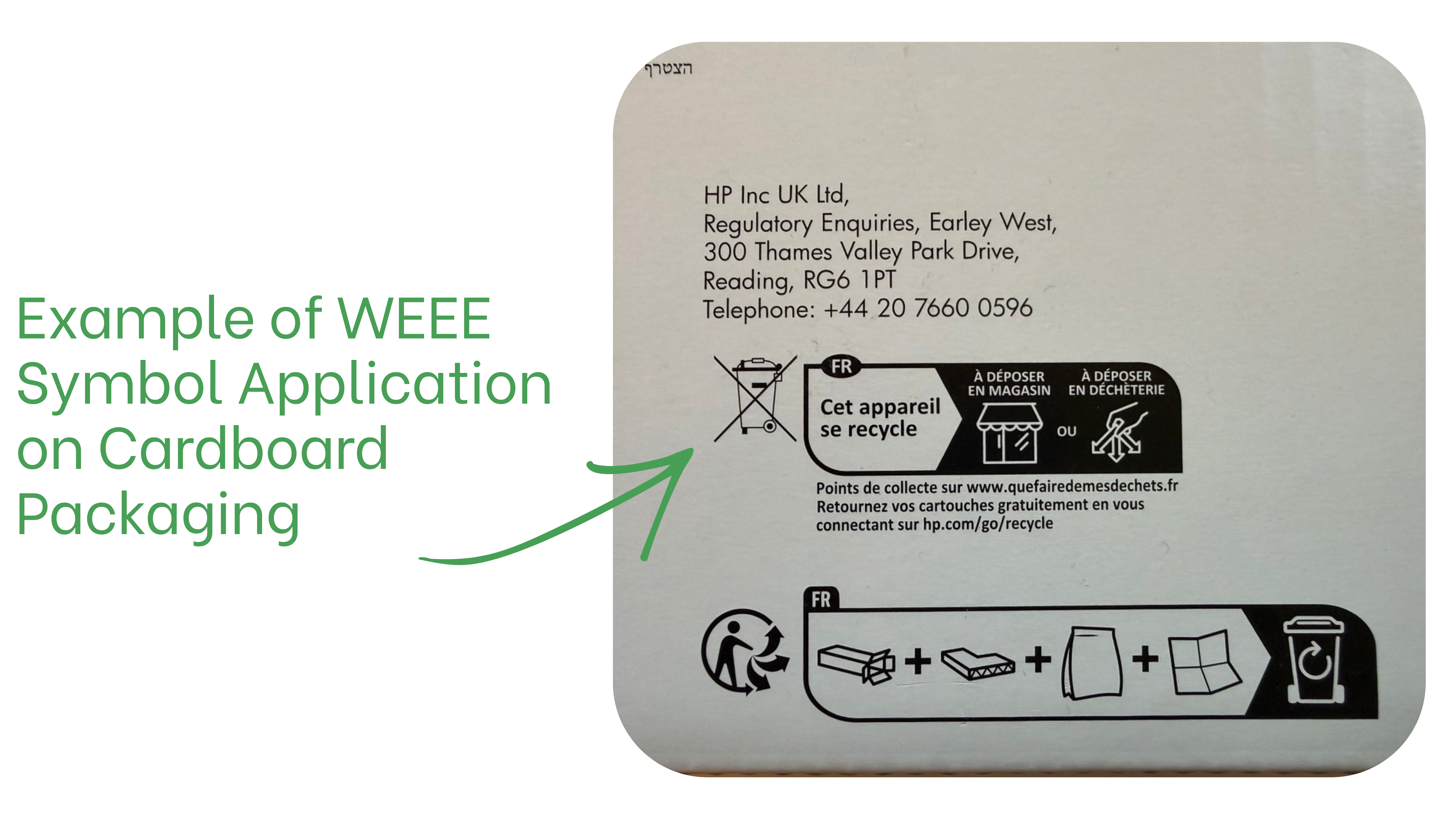
If the size or function of the equipment makes it technically impossible to apply the required marking directly on the product, the WEEE Directive allows manufacturers to provide the symbol and identification information on the packaging, instructions for use, or warranty documentation. This alternative approach is intended for small devices or products where marking could affect functionality or legibility.
In such cases, manufacturers should ensure that the WEEE symbol is clearly reproduced in accompanying materials and should retain a technical justification explaining why direct marking on the equipment was not feasible. The justification should be documented as part of the product’s compliance file and made available in the event of market surveillance inspections.
Penalties and regulatory risks
Penalties for non-compliance with WEEE marking requirements are determined at the national level and therefore vary between EU Member States. However, failure to comply may result in enforcement actions by market surveillance authorities, including administrative fines, product withdrawal from the market, or mandatory corrective measures.
Non-compliance can also create operational risks, such as customs delays, disruptions in distribution, and increased regulatory scrutiny. In addition to marking requirements, authorities may evaluate whether the producer has fulfilled broader WEEE obligations, including registration and reporting duties.
What auditors and market surveillance authorities check
Market surveillance inspections typically include both physical product verification and documentation review. Authorities may check whether the equipment includes the crossed-out wheeled bin symbol in the correct format and whether the marking remains visible and legible throughout the expected product lifespan. Inspectors may also verify that producer identification details are consistent with official registration data and that the marking corresponds to the product model and technical documentation.
In addition to the physical symbol, auditors may request evidence of internal procedures demonstrating that marking requirements are consistently applied across production batches, including quality control processes and traceability records.
Proper documentation practices
Maintaining comprehensive and well-organized technical documentation is essential for demonstrating compliance with WEEE marking requirements. Manufacturers should ensure that the technical file includes accurate reproductions of regulatory symbols, clear identification of the producer, and consistent product model and variant information.
Documentation should also contain declarations of conformity referencing applicable EU directives and standards, including EN 50419 where relevant. If alternative marking methods are used due to technical constraints, the documentation should include a written justification explaining why direct marking was not feasible. These records should be stored in a retrievable format to support audits, inspections, and market surveillance requests.
Environmental responsibilities in equipment marking practices
The distinctive WEEE symbol with a crossed-out wheeled container directly informs equipment users about environmental obligations. This widely recognized mark indicates that products should not be disposed of in the general waste stream, but require separate collection and special recycling processes.
Progressive manufacturers are increasingly implementing environmental practices in their labeling processes. Water-based inks are replacing traditional solvents, reducing emissions of volatile organic compounds. Recyclable label materials minimize waste generation at the end of their useful life. Laser marking technologies completely eliminate the use of consumables and do not produce chemical waste during operation.
Recycling facilitation through strategic marking implementation
Strategic product labeling helps specialized recycling companies efficiently sort equipment that has reached the end of its useful life. Standardized material identification codes enable automated sorting systems to separate different types of plastics and metal alloys, maximizing recycling rates. Integrating recycling data into unique identifier systems creates tangible benefits for the circular economy.
Forward-thinking manufacturers embed comprehensive recycling instructions directly into two-dimensional barcodes applied during production. Users scan these codes with their smartphones to access detailed disassembly procedures, component material identification, and information about local recycling facilities.
International harmonization initiatives for marking standards
International standardization organizations are actively pursuing progressive harmonization of marking requirements across different regulatory jurisdictions. The IEC develops comprehensive technical standards relating to the safety and identification of electrical products, which many countries adopt as mandatory national requirements.
Despite progress in harmonization, significant regional differences remain. North American jurisdictions are implementing certification marking requirements that differ fundamentally from European systems. Asian markets use unique identifier focused on product authentication. Multinational manufacturers must maintain operational flexibility in their marking systems to accommodate jurisdictional differences.
Emerging technologies reshaping electrical equipment identification
Revolutionary emerging technologies promise to transform how manufacturers implement methods of marking throughout the electrical equipment industry. The integration of blockchain technology can provide tamper-proof tracking of products from production to disposal. Augmented reality applications can overlay digital information onto physical products, eliminating the traditional space constraints that limit the content of conventional labels.
Research in nanotechnology is focused on developing microscopic labeling methods that create identifiers invisible to the naked eye but detectable with special scanning devices. These hidden features complement visible markings that meet regulatory requirements, providing complex levels of security that make counterfeiting attempts more difficult.
Digital product passports and extended information systems
The European Union is actively developing comprehensive requirements for digital product passports that will revolutionize the availability of product information. These digital systems will link physical products to large cloud databases containing detailed information about materials, manufacturing processes, and recycling procedures. Equipment labeling will increasingly include unique identifier codes serving as gateways to rich information repositories.
Implementation requires the coordinated development of marking technologies and data management infrastructure. Manufacturers must invest in reliable marking systems capable of reliably applying high-quality identifiers that link to digital records, while simultaneously developing information systems that manage lifecycle data collection.
Avoid penalties. Lovat supports WEEE marking, EPR registration, and reporting for electronics businesses.Book a demo or submit the form to start your WEEE compliance journey.