
Lovat Newsletter – February 2026
Lovat Newsletter – February 2026
Welcome to the February 2026 edition of the Lovat Newsletter. This month we’re sharing an important brand announcement, the latest EPR compliance updates across Europe and the United States, new platform features, and key tax regulatory changes in Poland and Illinois. Whether you’re managing extended producer responsibility obligations, VAT filings, or e-invoicing, this issue has something for you.
Lovat becomes Lappa from 20 march 2026
Starting 20 March 2026, Lovat will officially operate under a new brand name — Lappa. This is a rebranding update only. Our team, services, all existing agreements, and the full platform functionality remain completely unchanged. Your compliance workflows will not be interrupted in any way.
We understand that brand changes can raise questions, so here is a quick breakdown of exactly what is changing and what is staying the same:
- Website address will be updated — all old links will continue to work and redirect automatically.
- Mobile app will automatically update with the new Lappa logo. No reinstallation or manual action is needed on your part.
- Support emails will change to reflect the new brand name; however, old email addresses will remain active for two months to give you time to update your records.
- Brand name changes to Lappa, while the underlying legal entity remains the same — no changes to contracts or billing.
Full details, FAQs, and a timeline are available on our website and in your personal account. We’re excited about this next chapter and look forward to continuing to serve you under the Lappa name.
Product updates
February brought several important platform improvements designed to make EPR reporting and e-invoicing compliance faster, more accurate, and easier to manage at scale.
EPR country requirement updates
We’ve implemented the latest EPR requirement updates for France (Packaging and Textile categories), Estonia (Textile), and Belgium (Packaging). These updates reflect the most recent regulatory changes in each jurisdiction and ensure that producers using the platform remain fully compliant with current reporting and fee obligations. Our team continuously monitors regulatory changes across all supported countries so that you don’t have to.
USA EPR state guides launched
We’ve published comprehensive EPR compliance guides for every U.S. state, covering key requirements across multiple product categories including packaging, electronics, batteries, and more. As Extended Producer Responsibility legislation continues to expand across the United States, these guides give businesses a clear, state-by-state view of their obligations — from registration thresholds and reporting deadlines to fee structures and take-back requirements. Learn more about US EPR state guides
E-documents: advanced filtering and bulk actions
Our E-Documents module has been significantly improved. Users can now take advantage of advanced filtering to quickly locate documents by number, status, reporting period, or client name. In addition, new bulk action capabilities allow you to send multiple documents via Peppol or combined Peppol + email delivery in just a few clicks — dramatically reducing manual effort during high-volume invoicing periods.
Lovat makes e-invoicing compliance simple. We register your participant ID, connect you to Peppol, validate every document, and help you avoid costly fines — all in one place.
EPR news
Extended Producer Responsibility regulations continue to evolve rapidly across the globe. Below is a summary of the most significant EPR developments for businesses to be aware of in 2026, covering both the United States and Europe.
Maine introduces packaging EPR registration deadlines
Maine has announced firm registration deadlines under its packaging EPR program. Producers will be required to register by 1 July 2026. The first payment obligations will be due in September 2027, calculated based on 2026 reporting data. Fees will be structured by material category and will be used to reimburse municipalities for their recycling costs — a model designed to shift financial responsibility from local governments to producers. Businesses selling packaged goods into Maine should begin assessing their obligations now to ensure timely registration. Read more about Maine packaging EPR
USA packaging EPR expansion in 2026
The United States is seeing rapid expansion of packaging Extended Producer Responsibility legislation at the state level. A new overview article provides a detailed state-by-state breakdown of active packaging EPR regulations for 2026, explaining which states already have programs in place, what changes producers should expect during the year, and how reporting requirements and producer obligations may evolve. With several states in various stages of rulemaking, staying on top of these developments is critical for any business with a national market presence. Explore the full state-by-state details
Europe EPR fee regulations overview for 2026
For businesses operating across European markets, understanding the differences in EPR fee structures country by country can be a significant compliance challenge. A newly published article breaks down the 2026 Extended Producer Responsibility fee rules across Europe, explaining how fees are calculated in each country, key reporting timelines, and the compliance requirements businesses must meet. From France and Germany to Poland and Sweden, the regulatory landscape varies considerably, and staying informed is essential to avoiding penalties. Learn more about European EPR fees for 2026
Slovakia packaging labeling recommendations
Slovakia has specific requirements for how packaging must be marked and labeled before products can be placed on the market. A new guidance article covers the key rules and best practices for packaging labeling in Slovakia, helping producers avoid common compliance mistakes and reporting errors. If you sell into Slovakia or are planning to expand there, this resource is an important starting point. Get the full labeling guidance for Slovakia
Methods of marking electrical equipment
For companies placing electrical and electronic equipment on the market, correct product marking is a mandatory compliance requirement in most jurisdictions. A new article explains the key requirements and most common methods for marking electrical equipment — including which labels are legally mandatory, how to ensure compliance with product identification rules, and how to meet the regulatory standards set out under directives such as WEEE and RoHS. Learn more about electrical equipment marking requirements
Lovat makes EPR rules easy to follow. We handle registration, reporting, and help you avoid costly fines — all in one place.
Tax news
Two important VAT and sales tax regulatory changes came into effect at the start of 2026, affecting businesses operating in Poland and the United States. Here’s what you need to know.
Poland VAT exemption threshold increasing in 2026
From 1 January 2026, Poland has raised its annual VAT exemption threshold for small businesses from PLN 200,000 to PLN 240,000. This means that a greater number of small and medium-sized businesses can now operate without mandatory VAT registration in Poland, provided they do not supply goods or services that require VAT registration regardless of turnover. For businesses currently registered for VAT in Poland, or those evaluating whether registration is necessary, this change is worth reviewing carefully with your tax advisor. Learn more
Illinois – sales tax economic nexus rules simplified
Illinois has made a significant simplification to its economic nexus rules for remote sellers, effective 1 January 2026. The state has removed the 200-transaction threshold that previously served as an alternative basis for triggering sales tax registration. Going forward, remote sellers will be required to register for Illinois sales tax based solely on reaching $100,000 in annual sales into the state. This aligns Illinois more closely with the majority of other US states and reduces compliance complexity for businesses selling across multiple jurisdictions. Learn more
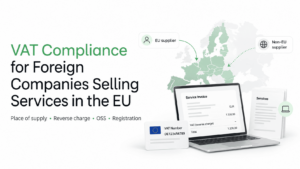
Lovat handles VAT compliance end to end — registration, filings, and risk-free reporting across multiple countries.
We are here to support your compliance journey. If you have questions or need assistance, feel free to reach out to our dedicated team.
Follow us on social networks to be the first to know the latest news: Facebook, LinkedIn