
EPR Packaging Fees: Eco Modulation and Sustainable Going Green
EPR Packaging Fees: Eco Modulation and Sustainable Going Green
Nature and significance of environmental material levies
Increasingly, manufacturers, importers, and brand owners in Europe face a financial obligation directly linked to the containers they distribute. Businesses have to pay EPR levies to cover the costs of handling waste after it has been used. These fees are part of Extended Responsibility frameworks that move the cost of dealing with trash from cities and taxpayers to the companies that make the wrapping in the first place. Everyone who does business in regulated markets must now understand environmental material tariffs. This is an important part of following the rules and planning your finances.
Extended Producer Responsibility is a policy that holds manufacturers responsible for the financial and, in some cases, operational aspects of their products’ vessels when they reach the end of their life. When a firm distributes goods in various formats like plastic, glass, fiberboard, or composite substrates, it is responsible for supporting the infrastructure that collects, sorts, and reprocesses those items after disposal. The EPR tariff represents the capital for this liability. It is calculated based on the category, mass, and volume of materials placed on the national market during a specific reporting interval.
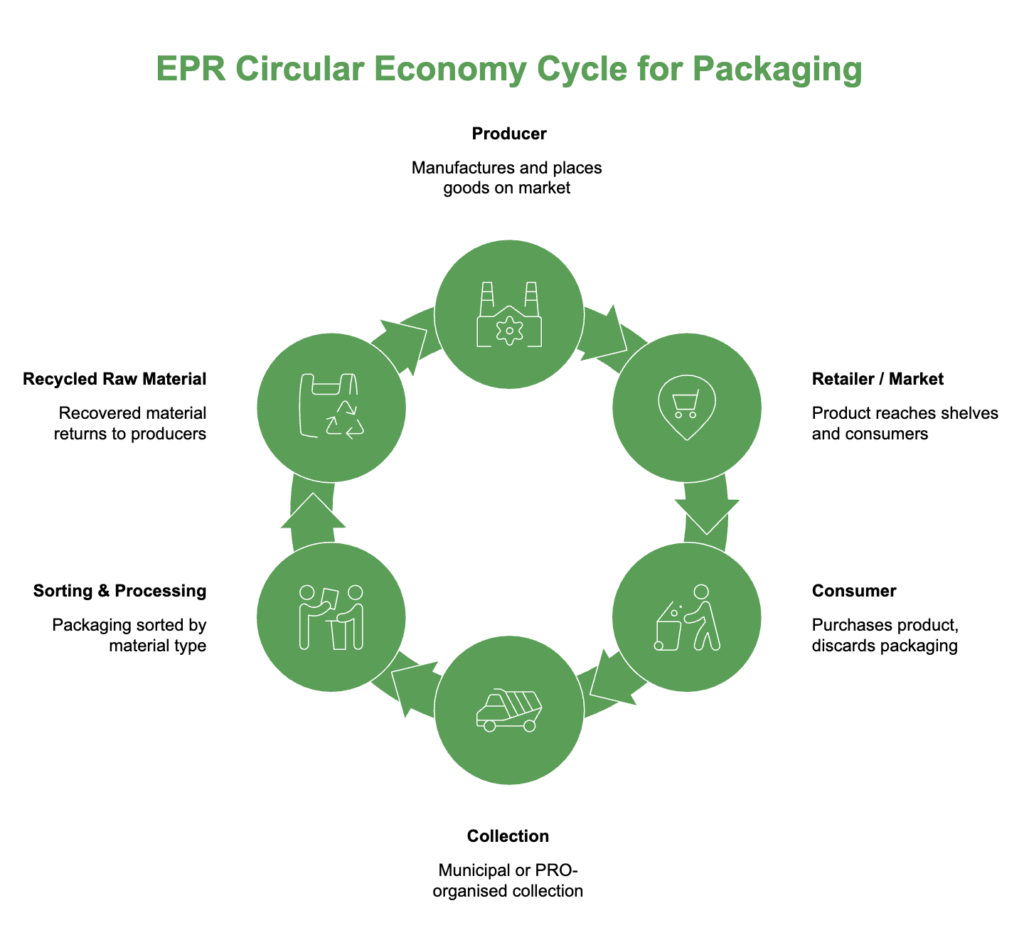
The fundamental logic behind these systems is straightforward: those who profit from distribution should fund recovery. This reasoning has prompted the adoption of such frameworks across Europe and beyond. France pioneered this structure, while Germany, Italy, Spain, and other Member States followed, each developing unique calculation methods to ensure rule adherence. Although pricing models vary by jurisdiction, the primary objective remains identical: funding the transition to a circular economy by internalizing environmental costs.
Usually, people who have to follow the rules have to register with a national organization (PRO), report how much and what kinds of materials they sell each year, and send in the right amount of contributions. If you don’t follow the rules, you could face big fines and, in some places, sales bans. Because of this, multinational companies that do business in more than one European country have to deal with different reporting requirements, each with its own deadlines, price lists, and classification standards.
Over the past ten years, rules have grown a lot to include more people.
Most current frameworks include the following:
- Brand owners making and ordering containers;
- Importers bringing items that are already full into the area
- Digital stores and vendors on marketplaces send goods straight to customers
- Small businesses that go over certain tonnage limits
The responsible parties understand that accountability extends beyond just large corporations to everyone in the supply chain. This means that almost all companies in the consumer goods, food, cosmetics, electronics, and logistics industries now have to pay these environmental fees.
These payments have a big effect on a company’s bottom line. Manufacturers using non-recyclable or difficult-to-sort formats can incur annual costs of hundreds of thousands of euros. Companies can save a lot of money, though, by making their products lighter, easier to recycle, or getting rid of substrates that cause problems. This makes me think of eco-modulation, which gives people a direct financial reason to choose greener designs for their goods.
It’s not just the law that says you should know how pricing works and what factors affect calculations. It’s also a chance to be strategic. Organizations that know how to set fees and change them can change their formats to save money and help the environment at the same time. The following sections look at these dynamics, starting with how to do calculations and ending with how systems are changing the way materials are chosen across the continent.
How to figure out EPR Pricing
There is no universal formula for these systems in Europe, yet the core principle remains: participants pay based on market placement. In nearly every jurisdiction, the primary variables affecting pricing are the substrate type, the mass per unit, and the total volume distributed within a reporting year.
To determine the contribution for a period, multiply the declared tonnage by the rate for each specific material. Polymers usually incur the highest taxes due to recycling complexity and processing costs. On the other hand, glass is often cheaper when there is good infrastructure for silica recovery. Paper and cardboard are in the middle, while composite or multi-layer formats usually cost the most.
Comparative fee levels by material (unit: €/kg)
| Packaging Material | Relative Fee Level | Recyclability Factor | Rate Range |
| Rigid plastic (PET, HDPE) | High | Moderate–High | 0.30–0.90 |
| Flexible plastic / films | Very High | Low | 0.60–1.50 |
| Glass | Low–Medium | High | 0.05–0.20 |
| Paper and cardboard | Low | High | 0.08–0.25 |
| Metal (aluminium, steel) | Medium | High | 0.15–0.45 |
| Composite / multilayer | Very High | Very Low | 0.80–2.00 |
Companies must submit data to the relevant PRO or national registry, typically annually. It is necessary for declarations to group amounts by substrate, format, and sometimes even product type. Because of mistakes, under-reporting, or missing deadlines, audits and fines that are much higher than any savings from not reporting are common. So, for good cost management, it’s important to get accurate information from all parts.
One common mistake is not thinking about the extra layers that a producer is in charge of. For instance, a beverage company might be responsible for more than just the bottle. Depending on national definitions, liability may extend to labels, shrink wrap, and pallet film used during distribution. Mapping this full inventory is the mandatory first step before attempting any optimization strategy.
The main concept of eco-modulated fees
Standard contributions establish a baseline, but eco-modulation operates on a different logic. It rewards manufacturers for sustainable choices and penalizes the use of formats that hinder recovery. Instead of a flat rate per kilogram, these systems adjust the cost based on design quality. So, two companies that use the same amount of polymer might pay very different amounts based on how easy it is to recycle or reuse their containers.
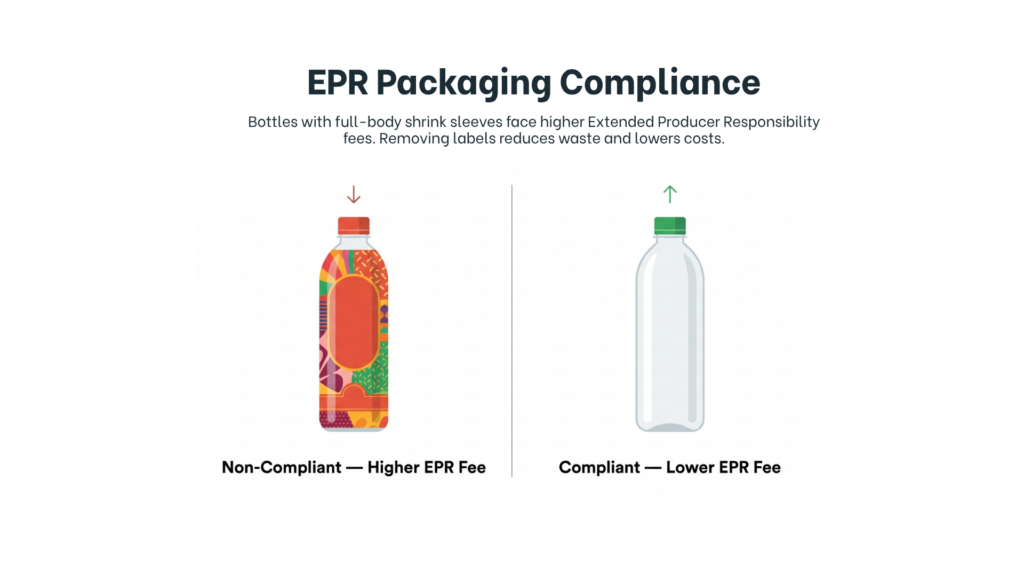
This mechanism uses a system of bonuses and penalties. The bonus is a discount for designs meeting specific standards, such as mono-material construction, absence of disruptive inks, or high recycled content. The malus is a surcharge for items containing hazardous substances, excessive layers, or materials flagged as problematic by national streams. In some jurisdictions, penalties can double or triple the base cost for non-compliant formats.
| Packaging Type | Standard Fee | Compliant Rate | Non-Compliant Rate |
| PET bottle — clear | 0.45 | 0.28 | 0.45 |
| PET bottle — with sleeve | 0.45 | 0.45 | 0.72 |
| Flexible pouch — mono PE | 0.90 | 0.63 | 0.90 |
| Flexible pouch — laminate | 1.20 | 1.20 | 1.92 |
| Cardboard box — recyclable | 0.15 | 0.10 | 0.15 |
| Cardboard box — coated | 0.15 | 0.15 | 0.24 |
France’s Citeo scheme was among the first to operationalize the model at scale. Germany’s system applies factors tied to recyclability classes defined by industry experts. Italy and Spain have progressively incorporated similar logic. The underlying message is consistent: modulated charges are not merely compliance variables—they are pricing signals designed to reshape design decisions at the source.
The effect of packaging materials on fees
When managing EPR costs, substrate selection is the most significant lever available. Fee schedules prioritize material types because the recovery efficiency and market demand for clear PET versus multilayer pouches differ immensely, even at identical weights. Any producer seeking smart format choices must understand these impacts.
Most European markets possess established systems for rigid plastics like PET, HDPE, and PP in unmixed forms. These typically attract moderate rates due to active secondary markets and widespread sorting technology. Flexible formats present a different scenario. Films and pouches made from polyethylene can be reprocessed, but municipal collection varies. When combined into multilayer laminates for food protection, recycling becomes difficult.
Format impact on annual costs (basis: 10 tonnes)
| Format | Primary Material | Standard Fee | Optimized Fee | Annual Savings |
| Rigid tray — clear PET | Mono-plastic | €4,500 | €2,700 | −€1,800 |
| Flexible pouch — PE/PA | Composite | €12,000 | €12,000 | €0 |
| Cardboard sleeve | Paper | €1,500 | €900 | −€600 |
Glass requires specific attention. While heavy—generating more liability per unit—its high circularity often keeps the per-kilogram rate lower than polymers. Paper and cardboard remain the most favorable category, though coatings change the math: once waxed or plastic-lined, they move to higher tiers. Auditing entire specifications, including adhesives and inks, is vital to secure the lowest possible rates.
Using green packaging as a way to lower EPR costs
The financial logic of these systems provides a measurable reason to prioritize environmental design. Switching to sustainable formats is not just marketing; it is a cost-reduction strategy. In every reporting cycle, improvements in material selection or recyclability translate directly into lower rates applied to total tonnage.
A systematic audit is the first step, reviewing all current formats against national design-for-recycling benchmarks. For instance, taking off a PVC sleeve from a PET bottle is a simple change that can move a product from the penalized to the rewarded group.
Impact of sustainable transitions (Unit: €/kg)
| Transition | Previous Format | New Format | Saving per Tonne |
| Remove PVC sleeve | PET + PVC | Sleeve-free PET | €300 |
| Laminate to Mono | PE/PA Pouch | Mono-PE Pouch | €550 |
| Plastic to Cardboard | PP Tray | Cardboard Tray | €700 |
Here are some strategies that always work to lower costs:
- Moving from multilayer laminates to mono-material films; making things lighter and optimizing their shape to lower their mass;
- Using fiberboard instead of plastic secondary wrapping; getting rid of metal closures on plastic that can’t be recycled;
- Adding post-consumer recycled content to get bonuses.
Eco modulation in important European markets
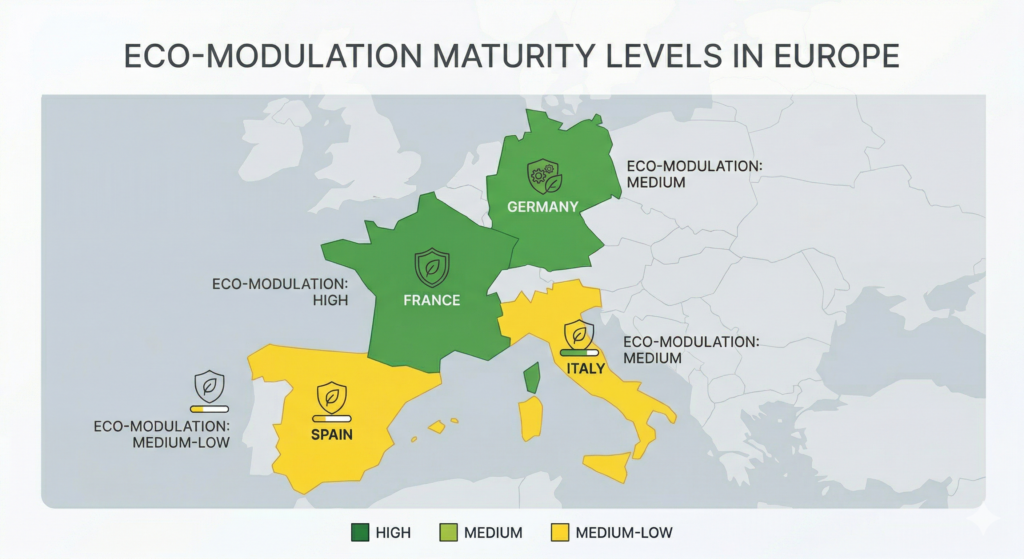
While the concept is similar across Europe, specific rules and compliance mandates vary by territory. Manufacturers cannot assume that a format compliant in one country meets requirements in another. These differences are caused by the recycling infrastructure and the priorities of local policies, which means that optimization needs to be done in a way that works for each market.
Table 5: Market comparison of Eco-modulation
| Market | Admin Body | Maturity | Key Bonus Criteria | Key Malus Triggers |
| France | Citeo | High | Recycled content >30% | PVC, opaque plastics |
| Germany | ZSR / PROs | High | Certified recyclability | Non-assessed items |
| Italy | CONAI | Medium | Lightweighting | Complex composites |
| Spain | Ecoembes | Med–Low | Recyclability alignment | Single-use plastics |
France’s Citeo manages one of the most granular systems, using a complex matrix to assign bonuses and penalties. Germany’s system (ZSR) focus heavily on “lightweight packaging”. Producers in Germany must ensure their formats are verified and that these checks remain current as sorting technologies improve.
Producers’ Practical Steps to Lower EPR Fees
Managing obligations strategically requires a structured framework encompassing regulatory awareness, engineering, and financial planning. The most successful companies are those that identify reduction opportunities and act before deadlines.
Average savings by action
| Optimisation Action | Complexity | Typical Saving | Payback Period |
| Data Correction | Low | 5–15% | Immediate |
| Sleeve/Label Removal | Low–Medium | 20–40% | 6–12 months |
| Mono-material Shift | Medium–High | 30–60% | 12–36 months |
| Secondary Fiberboard | Medium | 40–70% | 12–24 months |
| Full Design Overhaul | High | 50–80% | 24–48 months |
Optimization Framework:
- Inventory: list every part by substrate, format, and weight per market.
- Liability Mapping: calculate baseline costs using current national schedules.
- Gap Analysis: identify items incurring penalties or missing bonuses.
- Prioritization: rank redesigns by ROI (savings vs. implementation cost).
- Engineering: align packaging development with national recovery standards.
Stop overpaying on EPR fees. Lovat audits your packaging, identifies eco modulation savings, and manages full compliance across EU markets. Get a fee quote or book a call with our team.
FAQ
What makes eco-modulated fees different from standard EPR levies
EPR levies are the base costs for managing waste, while eco-modulated versions adjust those costs based on environmental design. Recyclable formats cost less, while formats that are hard to recycle cost more.
How is the cost of EPR packaging calculated
The formula for the calculation is: Weight (kg) × Fee Rate (€/kg) = Total Fee. The cost fluctuates, contingent on the material in question and the ease with which it can be processed for reuse.
Can packaging that lasts longer reduce costs
Absolutely. By opting for lightweight, recyclable, or mono-material designs, the cost per kilogram decreases, significantly lowering the overall expense.
What countries use eco-modulation
France, Germany, Italy, and Spain are the best examples in Europe, but each country has its own rules and price lists.
In this case, what does “green packaging” mean
It refers to creating formats that meet high recyclability standards. This allows businesses to qualify for lower tariff brackets, reducing their overall compliance expenditure.