
State by State US Packaging EPR Laws in 2026 What Producers Actually Need to Do
State by State US Packaging EPR Laws in 2026 What Producers Actually Need to Do
Why usa epr laws stopped being a niche topic
A few years ago, most brand teams could ignore what happened to a bottle or carton after sale. That is no longer realistic. A business selling across several markets may now need to file supply reports in Oregon, budget for fees in Colorado, and keep an eye on bills moving in places like Tennessee.
The shift from policy discussion to routine business issue happened quickly. usa epr laws now affect P&Ls, not just sustainability reports. If your company sells packaged goods across borders within the U.S., the number of jurisdictions that matter has grown from zero to seven and is still rising.
This is a working guide, not a legal brief, for companies trying to understand how usa epr laws affect reporting, fees, and design choices. For national brands, these US EPR laws are already part of normal compliance planning.
What usa epr laws actually shift
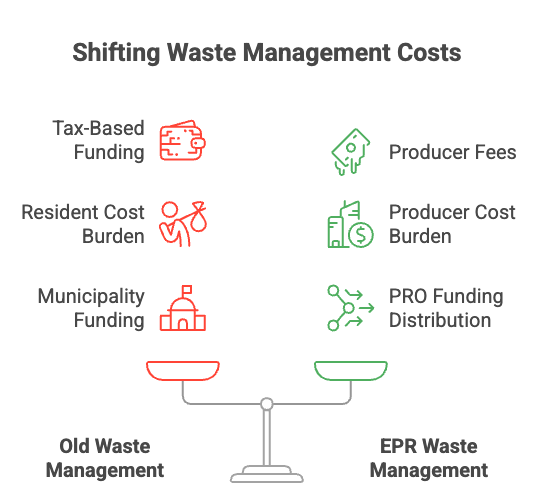
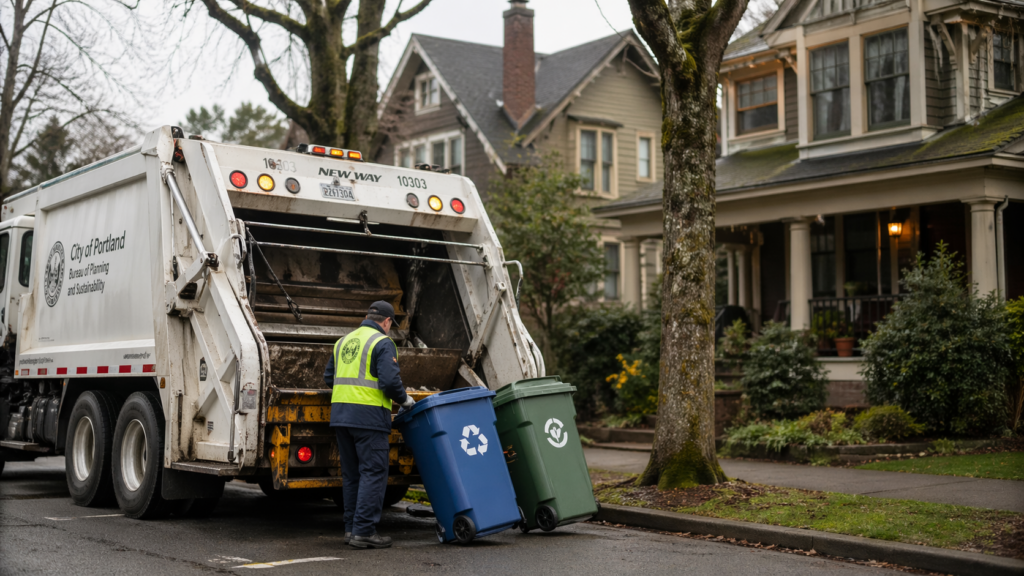
Under the old model, local governments covered much of the cost of collection and recycling, while residents paid through taxes and service charges. Extended producer responsibility changes that arrangement. When a company sells the pack, that company is expected to support the system that handles it after use. In practice, funds move from businesses into a Producer Responsibility Organization, or PRO, and then out to municipalities, sorting facilities, and education efforts.
That cost shift is one reason usa epr laws now matter to finance teams just as much as they matter to sustainability teams.
The idea is simple. The execution is not. Each jurisdiction has built its own version, and that is where complexity starts.
How epr works in the united states in practice
- At a high level, how epr works in the united states is fairly easy to explain.
- A jurisdiction adopts a law and assigns oversight to its environmental agency.
- That agency approves or recognizes one or more PROs. In most active programs, that means the Circular Action Alliance, or CAA.
- Companies register, report what they sold into that market, and pay fees linked to material type and recyclability.
- Those funds are then used to support collection, sorting, recycling, and consumer education.
The picture gets more complicated once definitions, exemptions, and deadlines begin to vary. In practice, how epr works in the united states depends on local rules rather than a single national model.
That is where the U.S. differs sharply from Europe. There is no federal framework, no shared definition of producer, and no common reporting portal. Each jurisdiction is building its own system.
Packaging epr news today united states
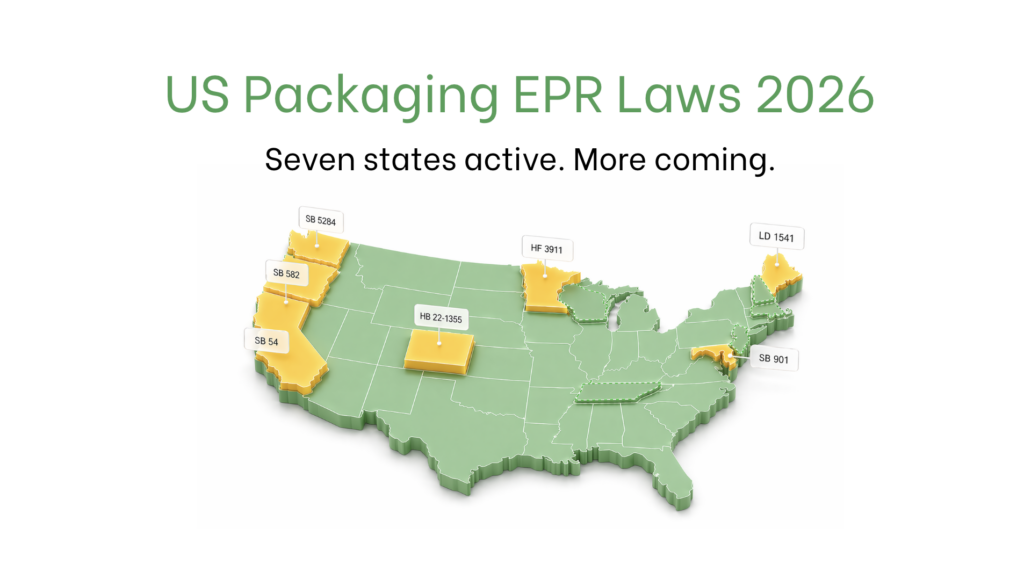
There are now seven jurisdictions with active packaging EPR laws: California, Colorado, Maine, Maryland, Minnesota, Oregon, and Washington. For teams trying to follow packaging epr news today united states, two sources usually matter most: the Product Stewardship Institute legislative tracker and CAA updates.
If you watch packaging EPR developments across the United States this year, you will also see movement in Wisconsin, New Hampshire, Tennessee, Massachusetts, and New Jersey. Not all of those bills will pass, but they are active enough to matter for medium term planning.
For most compliance teams, packaging epr news today united states only becomes important when it changes a reporting date, a registration requirement, a fee assumption, or a material rule.
Epr packaging laws in us states
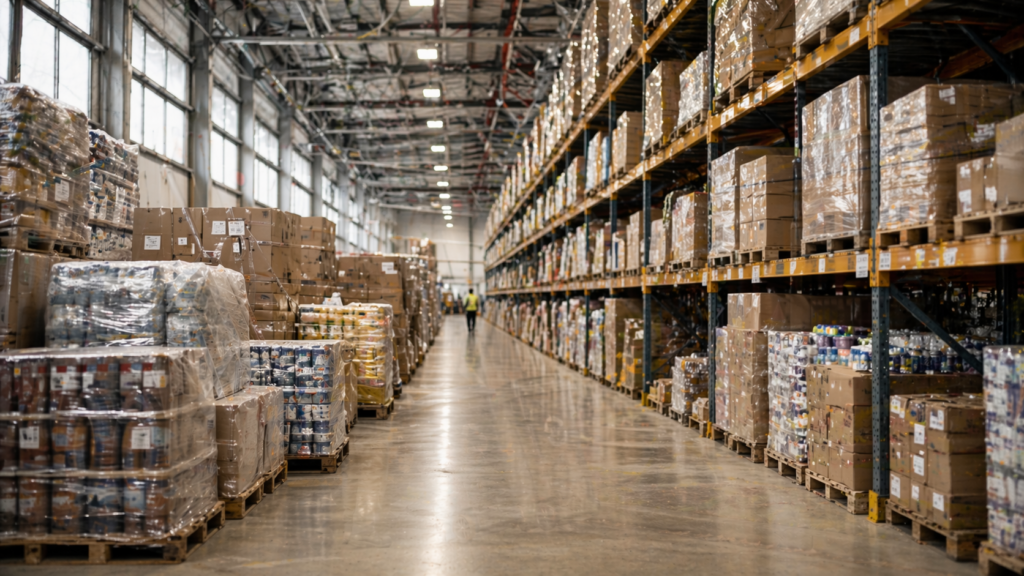
For producers, epr packaging laws in us states are no longer theoretical. Reports are being filed, fees are being charged, and deadlines now have real business consequences.
At that point, the issue stops feeling like public policy and starts feeling like workflow, budgeting, and data management.
These EPR packaging rules in US states are moving in the same general direction, but they are still far from standardized.
Which us states have packaging epr laws
If someone asks which us states have packaging epr laws in 2026, the answer is the same seven jurisdictions, listed below in the order they passed their laws:
- Maine — LD 1541, enacted 2021, uses a municipal cost reimbursement model
- Oregon — SB 582, enacted 2021, first fees invoiced July 2025
- Colorado — HB 22-1355, enacted 2022, fees began January 2026
- California — SB 54, enacted 2022, full compliance target 2032
- Minnesota — HF 3911, enacted 2024, producers registered in 2025
- Maryland — SB 901, enacted 2025, permits multiple PROs
- Washington — SB 5284, enacted 2025, producer registration due July 2026
For a national company, which us states have packaging epr laws is usually the first question in any multijurisdiction review.
When clients ask which U.S. markets already have active packaging EPR rules, I usually give them that list and add one practical note: expect more jurisdictions to join over the next several years.
Packaging epr laws by state
It is easy to skim packaging epr laws by state and assume the programs are broadly the same. That is a mistake. The differences are exactly where cost, timing, and reporting burden begin to matter.
- Maine remains the outlier. Companies pay the state, and the state reimburses municipalities rather than using the same PRO-centered structure seen elsewhere.
- Oregon and Colorado created the clearest operating model for reporting and fee payment.
- California is the only jurisdiction that wrote hard recycling targets directly into the statute, including 65 percent for single use plastic formats by 2032.
- Maryland departed from the single PRO model by allowing multiple organizations.
- Minnesota added a 2032 standard under which covered products must be reusable, refillable, recyclable, or compostable.
For companies comparing packaging epr laws by state, those structural differences matter more than the shared language around responsibility.
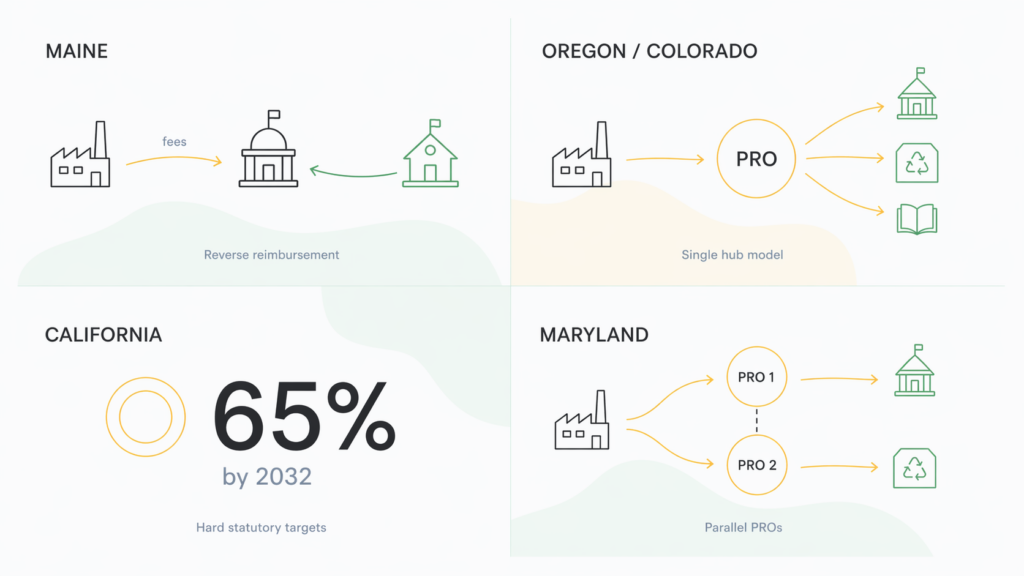
In real terms, the same PET bottle can trigger different reporting duties, deadlines, and cost outcomes depending on where it is sold.
Packaging epr laws by state and fee timelines
Oregon’s program is already operating. Companies must report covered materials sold into that market during the 2025 calendar year by May 31. Colorado began charging under its system on January 1, 2026. In Washington, businesses needed to appoint a PRO by January 1, 2026, and a simplified material supply report is due by May 31.
This is the point where implementation starts to affect real budget planning.
California is moving more slowly. Full compliance does not arrive until 2032, but CalRecycle has already been publishing the Covered Material Category list, and that is where much of the actual fee logic begins.
Extended producer responsibility laws in us
For most companies, the real problem is not deciding whether a format is covered. It is figuring out how to stop repeating the same analysis market by market. Across extended producer responsibility laws in us jurisdictions, there is some limited convergence. Many programs now use the same May 31 reporting date, and CAA serves as the main PRO in six of the seven active systems. Even so, fee structures, exemptions, and covered-material rules still differ.
For companies working across several jurisdictions, extended producer responsibility laws in us still require separate assumptions for scope, cost, and reporting method.
If you build your process on the assumption that extended producer responsibility rules in the US will soon harmonize, you are likely to waste time and money. A more realistic assumption is that differences will remain for years.
Epr legislation actions producers should take now
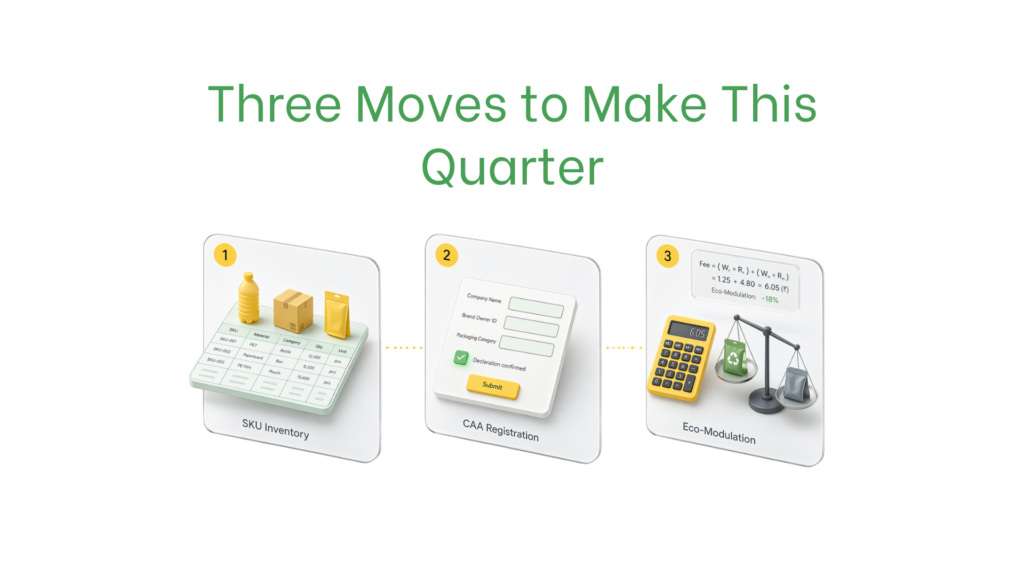
Under epr legislation, companies should focus on three practical moves this quarter.
- Build a covered-material inventory at SKU level. That means actual component weights, formats, and recyclability data, not just broad product categories.
- Register with the Circular Action Alliance. It remains the main entry point into six of the seven active programs.
- Run the eco-modulation math before your 2027 design decisions are locked. Better formats will be rewarded over time, while harder-to-recycle options will become pricier.
In 2026, epr legislation is already forcing companies to connect material data, reporting, and design choices much earlier than before.
That broader EPR legislation trend is turning compliance into a planning function rather than a last minute legal exercise.
Epr legislation us producers should watch in 2026
Beyond the seven active jurisdictions, roughly a dozen more have live bills or active policy discussions. The places worth watching for epr legislation us movement this year include Massachusetts, New Jersey, New York, Tennessee, Illinois, Nebraska, Wisconsin, and New Hampshire. Hawaii and Rhode Island both adopted needs assessment laws in 2025, and that often comes before full producer responsibility legislation.
For internal planning, epr legislation us matters before enactment because data readiness nearly always takes longer than expected.
Not every bill will pass this year, and some will carry over. Even so, the direction of EPR-related legislation in the US is clear: the map is expanding beyond the first wave of jurisdictions.
Epr legislation and the federal question
There is still no federal epr legislation for packaging, and it would be risky to assume that such a system will appear soon. HB 4109, the Recycling and Composting Accountability Act, would require a nationwide EPA assessment of recycling systems. That may be useful, but it is not a federal packaging EPR scheme.
At federal level, epr legislation remains much less important than the growing number of local programs.
So the practical conclusion does not change. Compliance remains a patchwork, that patchwork grows year by year, and the companies that treat it as a planning issue rather than an emergency usually come out ahead.
Packaging epr laws by state table
The table below shows the current status of the seven live programs and the main deadlines companies should track.
| State | Law | Status 2026 | Key deadline |
| Maine | LD 1541 | Rules finalizing | Register + report 2025 data by May 2026 |
| Oregon | SB 582 | Fully operational | Annual report May 31 |
| Colorado | HB 22-1355 | Fees active Jan 2026 | Supply report May 31, 2026 |
| California | SB 54 | Rulemaking | Full compliance by 2032 |
| Minnesota | HF 3911 | Implementation | Stewardship plan by Oct 2028 |
| Maryland | SB 901 | Setup phase | Plans due July 2026 |
| Washington | SB 5284 | Setup phase | Register by July 2026, report May 31 |
If you have questions or need support, you can book a demo with our team or contact Lappa directly